Key takeaways
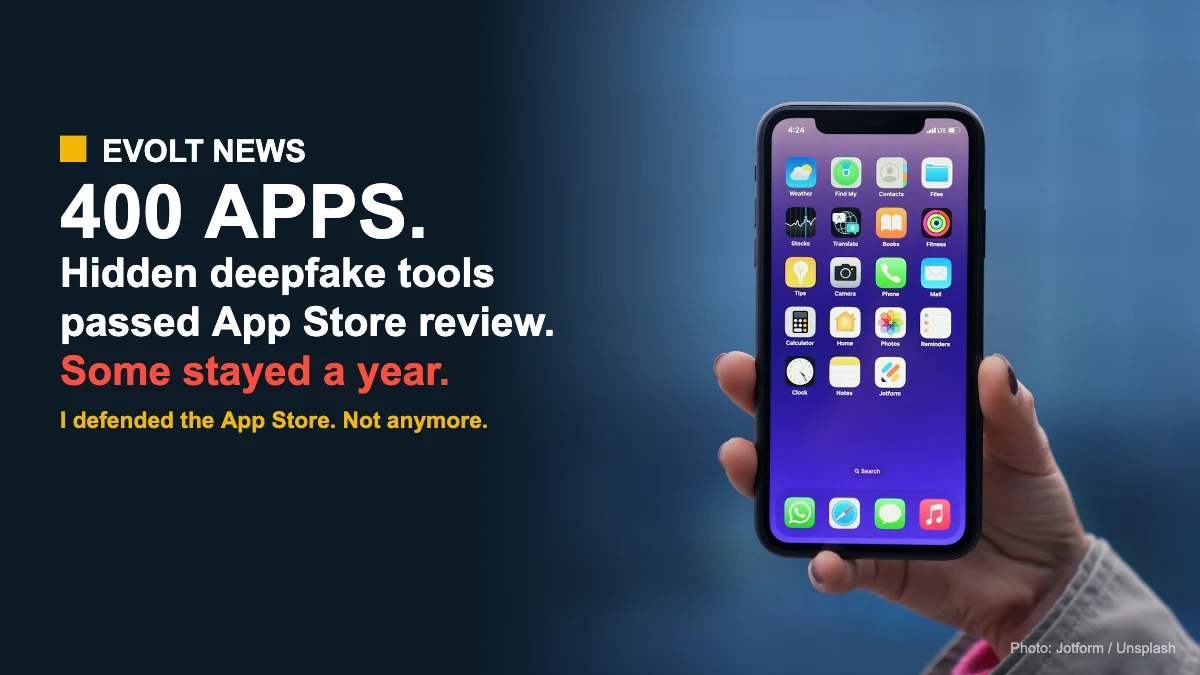
- A WIRED investigation based on research by the nonprofit AI Forensics found a network of more than 400 apps and websites posing as pet photo editors, language tutors and AI workout coaches. After review, a server switch unlocked tools that made sexual and violent deepfakes from uploaded photos of real people.
- Some of the apps were available for about a year, and users bought credits through Apple’s and Google’s payment systems. Google had removed most of them before WIRED called. Apple removed 19 after WIRED shared details, and said the apps changed only after they passed review.
- My view: I defended the App Store for years against Epic and against forced sideloading. I believed Apple kept checking apps, not just once. This broke something in me. Apple should publish the list of apps and say what happens to the victims.
On November 2, WIRED published an investigation built on research by the European nonprofit AI Forensics. It found a network of more than 400 linked apps and websites that looked like ordinary AI tools: language tutors, AI workout coaches and an app called Viefur that dressed pet photos in human clothes. Under certain conditions, a switch on the developers’ server loaded a hidden interface that turned photos of real people into explicit sexual images and videos, including templates of sexual violence and threats with a knife. One trigger was installing the app after tapping a deepfake ad on Facebook or Instagram. Users bought credits for the deepfakes through Apple’s and Google’s payment systems.
The researchers linked the network to Chinese-speaking developers and a Hong Kong-registered company. Some apps were available for about a year; AI Forensics first spotted the operation in early September, and a researcher at Infoblox found nearly 500 linked domains. Google had removed most of the apps before WIRED contacted it. Apple removed 19 apps after WIRED shared the details and said the apps passed review and changed their content only afterward. Meta acted against 11,600 ad accounts and 15,000 pages. On October 16, Apple had added a new App Store rule, 2.5.19: “Don’t include any hidden, dormant, or undocumented features in your app.”
In this article: I was the one defending the App Store · 400 apps, and some of them stayed for a year · In 2025 Apple bragged. In 2026 it embarrassed itself · Somebody made money on it · Apple doesn’t talk to us anymore · WIRED named one app. Apple named none · And what about the victims? · Sexual abuse tools, hiding in the App Store · For once, Google was faster · Grok stays, because it belongs to Musk · The EU bans these apps. We need that here too · What can ordinary people do? · FAQ
I was the one defending the App Store
This one really cracked something in my head. In my earlier articles, I was the one who defended the App Store when Apple fought Epic in court, and when the EU forced it to allow apps from outside its store. I told everyone around me how safe I feel, and I didn’t recommend to anyone to download apps from anywhere else.
I always thought the App Store checks apps all the time. Not just one check when a developer submits an app, but that Apple keeps protecting us and does random checks later too, exactly so that apps like this don’t make deepfakes that end up in ads, or worse, in a sexual context, or in violence with a knife. Now I’m surprised, and I’m furious. How is this even possible, Apple?
400 apps, and some of them stayed for a year
How is it possible that so many apps sit in the App Store, get into our phones, and then we only see ourselves somewhere in an ad, promoting some product or some scam?
For so many years, Apple defended its store by telling us that apps from outside the App Store don’t guarantee our privacy. So how will you defend this one? Again with “it’s an extremely small number and nothing happened”? Here we are talking about apps that stayed in the store for a year.
In 2025 Apple bragged. In 2026 it embarrassed itself
In May, Apple bragged in its yearly fraud report about how skilled it is. In 2025, it stopped more than $2.2 billion in potentially fraudulent transactions and rejected over 22,000 app submissions for hidden or undocumented features. That’s the 2025 number.
And what do we have in 2026? With this news out, Apple embarrassed itself with its own statistic. Exactly the hidden features it bragged about catching slipped through for about a year.
Somebody made money on it
Nobody has said how much this network earned. But nudify apps overall made more than $122 million in lifetime revenue, according to the Tech Transparency Project, and Apple and Google took their cut of the in-app purchases. San Francisco’s city attorney said in July that the two companies likely earned “millions of dollars in fees” from these apps.
And the people who know how to make that kind of money through scams in the App Store, don’t you want to go to a normal job instead of cheating so many people? Use those skills for something useful.
| Date | What happened |
|---|---|
| January and April 2026 | Tech Transparency Project finds 55, then 46 nudify apps in the App Store; nudify apps overall had 483 million downloads and over $122 million in revenue |
| May 2026 | Apple says it rejected over 22,000 submissions for hidden features in 2025 |
| July 17, 2026 | San Francisco’s city attorney demands Apple and Google remove nudify apps; Apple removes 3 of 13 named |
| August 18, 2026 | Apple pulls Kromix after WIRED reports Meta ads with a deepfake of a woman resembling a US politician |
| Early September 2026 | AI Forensics spots the network; 27 apps live on Google Play with over 350,000 downloads |
| October 16, 2026 | Apple adds rule 2.5.19 against hidden features and bait-and-switch apps |
| November 2, 2026 | WIRED publishes; Apple removes 19 apps after being contacted |
| December 2, 2026 | EU ban on nudifier apps takes effect |
Apple doesn’t talk to us anymore
Apple really doesn’t tell us anything lately. We learn everything from someone else. Here it was WIRED and AI Forensics, not Apple.
And the only explanation, that the apps were clean during review and changed later, appeared on 9to5Mac, not on Apple’s own website. No warning for users, no list, nothing. My guess, and I’m about 90% sure of it, is that when there is a problem, Apple runs to the sites that will write what suits it, gives them one sentence, and no further question comes. Apple has become arrogant, way too arrogant. How did it happen that Apple stopped talking to us?
WIRED named one app. Apple named none
WIRED named at least one app, Viefur. Apple named none. So my question is simple: if there were 400 of them, why not publish the list? People should know whether it concerns them, whether they downloaded some stupid app by accident, so they are not surprised one day when they see themselves in some deepfake.
We also don’t know how many of those apps were in the App Store and how many only on Google Play. I certainly don’t believe one app did all of this. There were more of them. Will Apple tell us later, or will it hide it? I’m curious.
And what about the victims?
And now the most important thing. Why is nobody talking about the victims whose photos were used, God knows where? Apple and Google took their cut. They certainly didn’t return that money to the scammers, but we don’t know what they did with it.
Did anyone contact the victims when this came out? Did anyone talk to them? Will they get at least some compensation? What happens next? Nobody talks about it, and I’m sure Apple won’t comment on it either.
Sexual abuse tools, hiding in the App Store
A network that hid tools for sexual abuse is mega, even for Apple. Truly. Why did nobody deal with it? Why did nobody check more than once what these apps do in the background?
For once, Google was faster
What caught me off guard: Google removed those stupid apps on its own, before WIRED even called. Maybe for the first time, Google solved a problem faster than Apple. That’s my feeling, and I’m actually glad about it.
Grok stays, because it belongs to Musk
And Grok and X, full of 18+ content, stay in the App Store. We know why: they belong to Elon Musk, and Apple won’t do anything about it. Musk carries too much weight everywhere, and we have to accept that, even though X doesn’t belong among normal social networks anymore. Sometimes you just stare at what you find there.
The EU bans these apps. We need that here too
The EU bans nudifier apps from December 2. It shows how Europe protects its citizens, even if many people don’t like EU rules. And I say we need reliable regulators here too, at least half as good, who think about people and not only about money.
What can ordinary people do?
Advice for people is hard right now. In the age of AI, I think almost every second programmer will have some app built in a single evening with AI. What they put in it is hard to tell, when even Apple is no longer that good at it, and calmly lets an app sit there for a year so people download it and become targets for scammers.
I will keep using the App Store. Not because I’m used to it, but because there is still nothing better. But something broke, and Apple has to earn it back.
Also on Evolt News: John Ternus and Apple’s product arrogance · HomePod mini 2 and the Siri AI fine print · ChatGPT and iCloud: no thanks
Featured image: Jotform / Unsplash.
This article is opinion.
App Store deepfake apps: FAQ
What did WIRED find in the App Store?
A network of more than 400 linked apps and websites that looked like ordinary AI tools, such as pet photo editors, language tutors and workout coaches, but could unlock hidden tools for making sexual and violent deepfakes from uploaded photos of real people. The research came from the nonprofit AI Forensics.
How did the deepfake apps get past App Store review?
According to WIRED and Apple, the apps showed harmless content during review. Afterward, a switch on the developers’ server changed what the app loaded, based on things like location, language, a device identifier or arriving from a Facebook or Instagram ad.
How many deepfake apps did Apple remove?
Apple removed 19 apps after WIRED shared details. Apple has not published a list of the apps or how many times they were downloaded on iPhones. WIRED named one app, Viefur.
Did Apple make money from nudify apps?
Users bought credits through Apple’s and Google’s payment systems, so both companies took their usual cut. Nobody has said how much this network earned; nudify apps overall made more than $122 million in lifetime revenue, according to the Tech Transparency Project.
What new App Store rules did Apple add?
On October 16, 2026, Apple added rule 2.5.19, which bans hidden, dormant or undocumented features, strengthened its rules against apps that hide their purpose during review, and added nonconsensual intimate imagery to its user-generated content rules. Violations can lead to removal and termination of the developer account.
How can I protect myself from deepfake apps?
Be careful with new AI photo apps from unknown developers, especially ones you found through social media ads. Check the developer name and reviews, avoid uploading photos of other people, and delete apps you don’t use. Apple has not published a list of the removed apps.
Sources: WIRED, AI Forensics, Infoblox, 9to5Mac, AppleInsider, TechCrunch, Malwarebytes, Tech Transparency Project, Apple.
Our Take
A network of 400 apps hid tools for sexual and violent deepfakes, some of them for about a year, while Apple took its cut and bragged about catching hidden features. I defended the App Store for years. This broke something.
Apple, publish the list, tell us what happens to the victims, and start checking apps after review, not only before it. Talk to us, not only to the sites that write what suits you.