Key takeaways
- Tesla now gives European FSD drivers earlier attention warnings, an instant strike for looking away during a manoeuvre, and a hands-on-wheel rule above 130 km/h (81 mph).
- In the US, the same software on the same HW4 cars was tuned to nag less, and Elon Musk said FSD allows texting “depending on context.”
- My view: Tesla can make FSD strict whenever it wants. It does it only where a regulator forces it, and leaves US drivers with all the risk.
Tesla is rolling out stricter driver monitoring for FSD in Europe: earlier attention warnings, an instant strike for looking away during a manoeuvre, and hands on the wheel above 130 km/h, approved by the Dutch regulator RDW and adopted in 11 countries. In the US, the same software on the same HW4 cars was tuned to nag drivers less, and Elon Musk said FSD lets you text “depending on context of surrounding traffic.”
In this article: So it was possible all along · Same car, two prices for your life · “Text and drive,” says the CEO · The results are already on the road · Why the US gets the loose version · My prediction · What Tesla owners should do now · FAQ
Update: This stricter European version is exactly what Italy just approved. Read Tesla FSD approved in Italy, and why Europe gets a safer FSD than the U.S.
So it was possible all along
For years, every time someone asked Tesla for stricter driver monitoring, the answer was the same: FSD is getting so good that the nags only annoy people. Now a regulator in the Netherlands said “show us,” and suddenly Tesla has earlier warnings, instant strikes and a hands-on rule above 130 km/h. The code exists. It’s running right now on HW4 cars in 11 countries.
So nobody can tell me it’s not possible. It is possible. Tesla just decides where it wants to do it.
Same car, two prices for your life
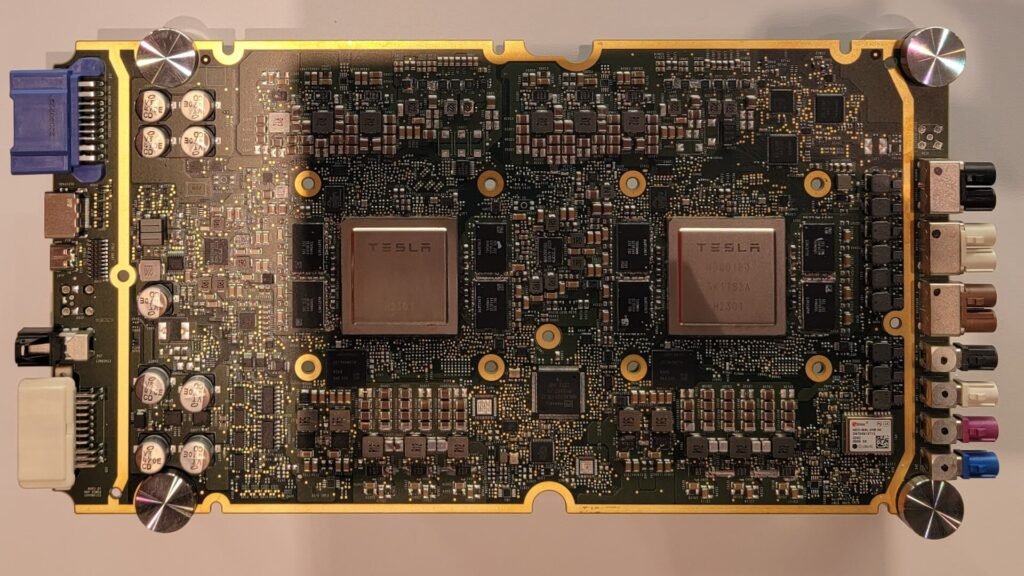
Same cabin camera. Same HW4 computer. Same software. In one country the car watches your eyes like a strict teacher. In another, it lets you look at your phone.
Imagine a restaurant chain that keeps the kitchen clean only in the cities where the health inspector comes. Same menu, same cooks, same logo on the door. Would you eat in the other city? That’s exactly what Tesla is doing with your safety. The difference is not the technology. The difference is who is checking.
“Text and drive,” says the CEO
Last year at the shareholder meeting, Elon Musk complained the car was “a little strict about keeping your eyes on the road” and said Tesla would “allow you to text and drive essentially.” When an owner asked if FSD allowed texting, his answer was: “Depending on context of surrounding traffic, yes.”
Texting while driving is illegal in 49 US states. FSD is still a Level 2 system, and Tesla’s own fine print says the driver is responsible at all times. So the boss tells you to text, and the contract says if something happens, it’s 100% your fault. Wow. I really don’t know how to call this other than a trap, the way I see it.
The results are already on the road
This is not theory. Last month, a driver told the California Highway Patrol he was asleep on FSD when his Tesla drove through a freeway closure and hit a patrol car, seriously injuring two officers. A US congressman asked the safety regulator to look at Tesla’s driver monitoring after dozens of videos showed drivers apparently asleep behind the wheel.
I wrote about the truck crash in Naples with three dead, and I wrote about the Cybercab crash reports. Every time it’s the same picture: the system is sold as smarter than it is, and people believe it.
Why the US gets the loose version
Simple. In Europe, a regulator tests every update before it ships and can say no. In the US, nobody approves driver-assist software in advance. Tesla certifies itself, and the regulator steps in only after crashes and complaints pile up.
And in the US, “fewer nags” sells. It’s a selling point for the FSD subscription, the same subscription I wrote about with the Cybercab and its monthly fee. A system that watches you strictly is less fun, and less fun means fewer subscriptions. So in my opinion it’s not about safety at all. It’s about money, like almost everything with Tesla lately.
My prediction
I’m 90% sure the US regulator will force the same strict monitoring on Tesla within a year. And when it happens, Tesla will present it as a “new safety feature” with a nice post on X, as if it was its own idea. Remember my words.
Tesla, if your system is good enough to let people text, prove it with data to the European regulator. You didn’t. You added warnings to get approved. That tells me everything.
What Tesla owners should do now
Don’t believe the CEO. Believe the fine print, because that’s what the court will read. Keep your eyes on the road, keep your phone in your pocket, and treat FSD like what it legally is: a driver assistant, not a driver. If something happens, nobody at Tesla will sit next to you in court.
Also on Evolt News: Tesla FSD truck crash in Naples · Cybercab: 8 crashes, zero injuries? · Cybercab for $29,990 plus $299 a month
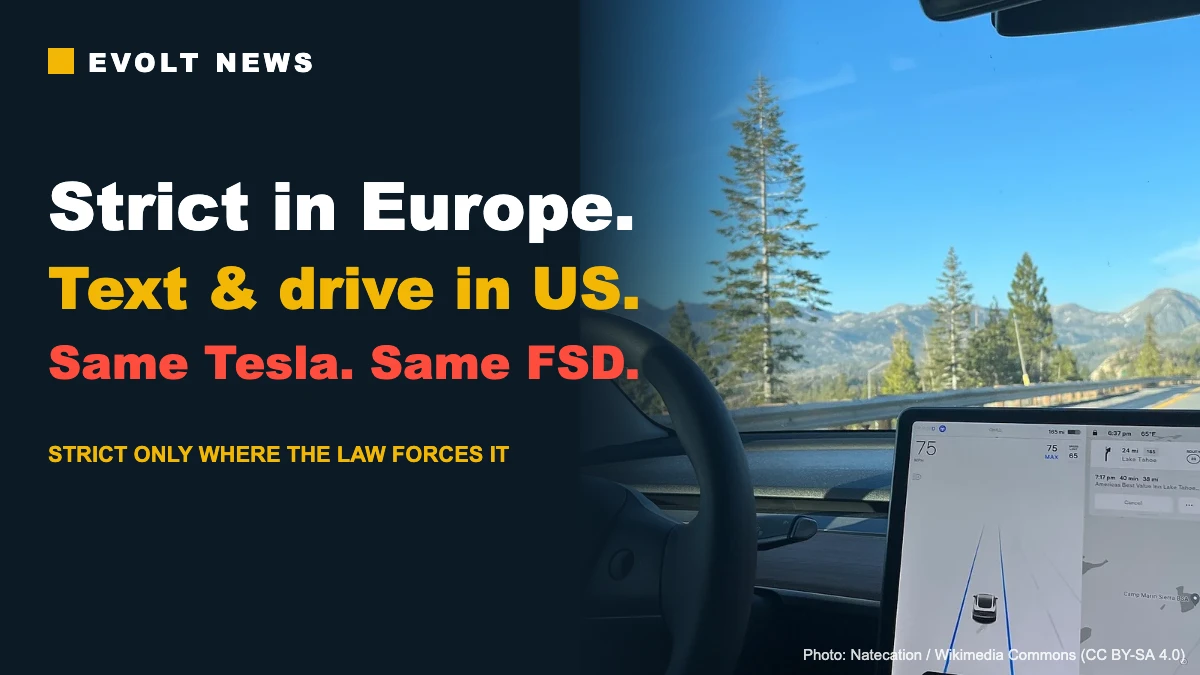
Featured image: Natecation / Wikimedia Commons (CC BY-SA 4.0).
This article is opinion.
Tesla FSD monitoring in Europe vs US: FAQ
What changed in Tesla FSD driver monitoring in Europe?
A Tesla Assisted Driving update approved by the Dutch regulator RDW gives earlier attention warnings, a full strike if the driver is not paying attention during a manoeuvre, and requires hands on the wheel above 130 km/h. It also requires confirming any set speed above the displayed limit.
Which countries have the stricter FSD update?
The RDW approved it for HW4 vehicles in the Netherlands, and ten other countries have adopted the Dutch approval, including Finland. EU-wide approval still waits for a vote at the TCMV committee.
Is driver monitoring looser in the US?
Yes. Tesla said FSD v14.3.3 was built to nag drivers less, and US drivers have been allowed to go hands-free at any speed since Tesla moved to cabin-camera monitoring in 2024.
Did Elon Musk say you can text while using FSD?
Yes. Asked whether FSD v14.2.1 allowed texting, Musk replied: “Depending on context of surrounding traffic, yes.” Texting while driving is illegal in 49 US states, and Tesla says the driver is responsible at all times.
Is Tesla FSD self-driving?
No. FSD (Supervised) is a Level 2 driver-assistance system. The driver must supervise it and is legally responsible.
Sources: RDW, Electrek, NHTSA, California Highway Patrol.
Our Take
Tesla just proved it can make FSD watch drivers strictly, with earlier warnings and instant strikes, because a European regulator demanded it. On the same cars in the US, it went the other way and its CEO talked about texting while driving.
The way I see it, the difference is not the technology but the money and the lack of a regulator. Until someone forces it, US drivers carry the whole risk.