Key takeaways
- Apple plans to show its first smart glasses at WWDC in June 2027 and sell them by the end of 2027. They have no display and run no apps.
- Siri AI does everything through your iPhone, while cameras and sensors keep feeding it what happens around you. Apple’s own employees call the product “AirPods for your face.”
- My view: three days ago I called them earphones on your nose. Now Apple confirms it. You’ll pay to wear a Google brain on your face, with eyes that never sleep.
Apple will introduce its first smart glasses at WWDC in June 2027 and put them on sale by the end of the year, according to Bloomberg’s Mark Gurman. The first generation has no display and runs no apps: Siri AI handles everything through a nearby iPhone, while cameras and sensors constantly tell it what is around you.
In this article: How we got here · By the numbers · Apple’s words, not mine · The whole product is Siri. And Siri is Google · Eyes that never sleep · Developers do the work for free · What about people who already wear glasses? · My prediction · Verdict · FAQ
How we got here
| When | What happened |
|---|---|
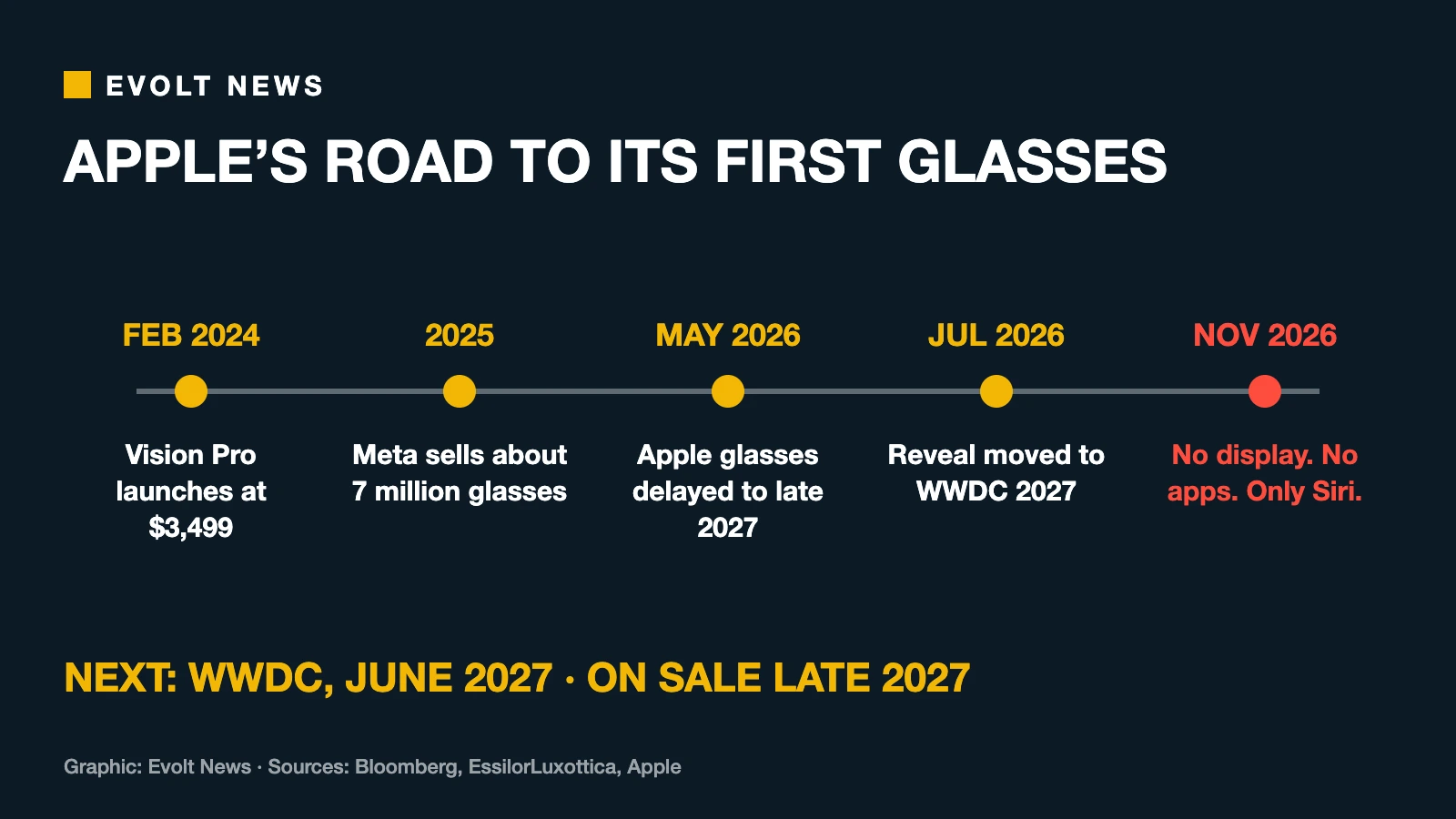
| February 2024 | Apple Vision Pro launches at $3,499. Almost nobody buys it. |
| 2025 | Meta sells about 7 million Ray-Ban and Oakley smart glasses in one year. |
| May 2026 | Apple’s glasses slip from 2026 to late 2027, aimed at the $200 to $500 eyewear market. |
| July 2026 | The reveal moves to WWDC 2027. Apple wants a “privacy-first” product and even considers glasses with no cameras. |
| November 2026 | A Chinese supplier confirms it works on Apple’s AI glasses. Days later: no display, no apps, only Siri. |
By the numbers
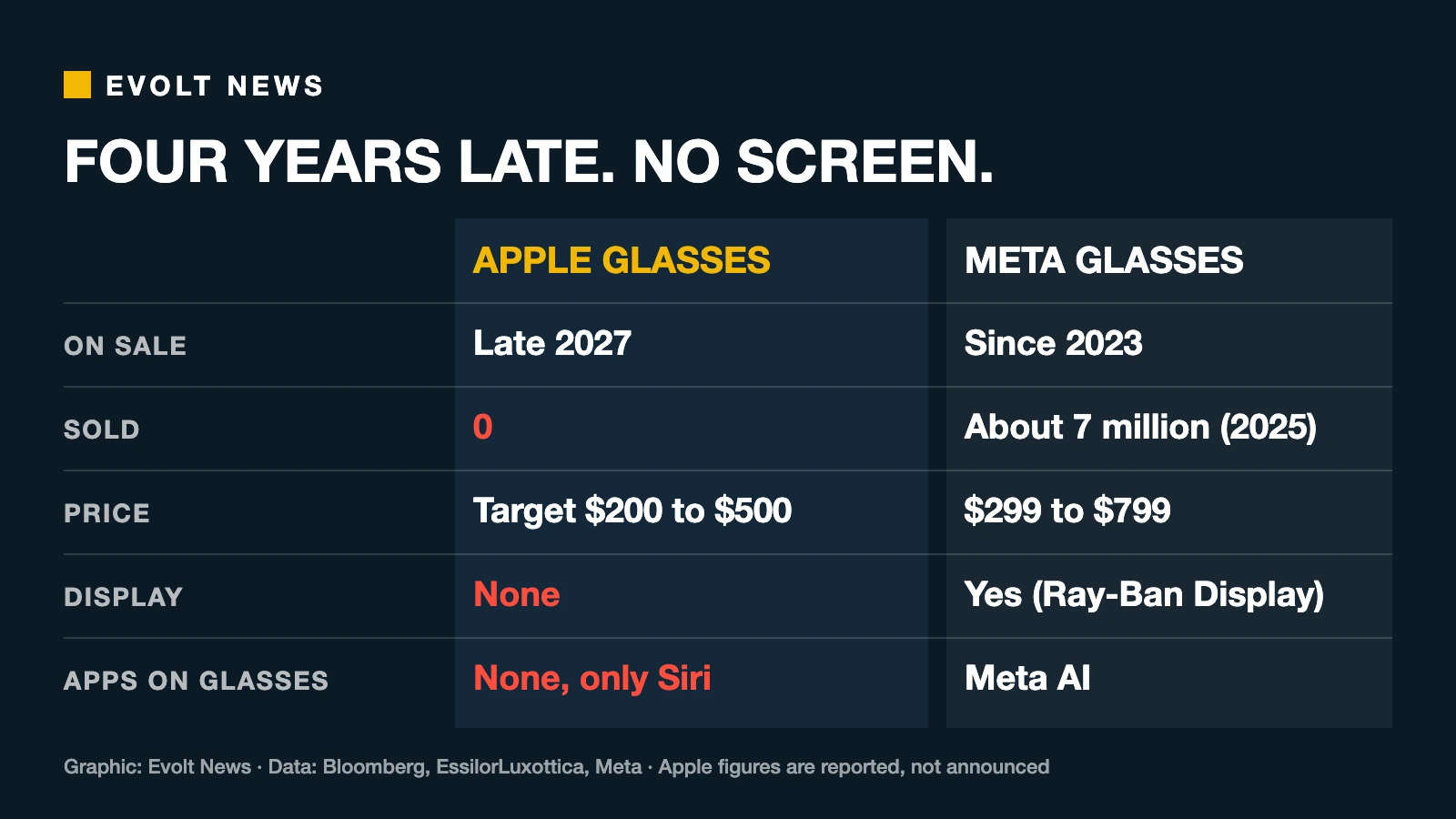
| Apple glasses (reported) | Meta glasses | |
|---|---|---|
| On sale | Late 2027 | Since 2023 |
| Sold | 0 | About 7 million in 2025 |
| Price | Target $200 to $500 | $299 to $799 |
| Display | None in the first generation | Available on Meta Ray-Ban Display |
| Apps on the glasses | None, only Siri through iPhone | Meta AI and its apps |
Apple’s words, not mine
Three days ago I wrote that Apple’s glasses without a display are just earphones on your nose at a higher price. Some people told me I’m too harsh. Now Apple’s own employees call the product “AirPods for your face.” Thank you, Apple, for the confirmation. I couldn’t have said it better myself.
And look at what Apple is proud of: “industry-leading” audio and battery life for the whole day. Those are headphone features. Fine, glasses on the nose are more comfortable than earbuds stuck in your ears for ten hours, I’ll give Apple that. But that’s comfort, not innovation.
The whole product is Siri. And Siri is Google
No screen. No apps. So what do you actually buy? A voice. The whole product is Siri, and Siri AI runs on Google’s Gemini brain, as I wrote when Gemini came to CarPlay. So in late 2027 you’ll walk around with Google’s brain on your face and an Apple logo on the frame, and you’ll pay Apple for the privilege.
Wherever the apple logo sticks, it becomes expensive. Even when the brain inside belongs to someone else, and even when Google gives that brain away for free.
Eyes that never sleep

This is the part that bothers me most. According to the report, Siri in the glasses will constantly receive information from the cameras and sensors. Constantly. Not when you ask. All the time.
Apple again says the cameras “won’t take photos.” I’ve heard that before, with the AirPods with cameras: the code showed they capture 640 by 640 images for Siri, Apple just doesn’t call them photos. And who is in those images? The person next to you in the metro, the cashier, a child in the park. They never agreed to feed Siri with their faces.
Yes, there’s a small light on the front. Meta’s glasses had one too, and people learned to switch it off. That’s why critics call them “pervert glasses.” Why would Apple’s light be any different? A light is not privacy. A light is an excuse.
Developers do the work for free
Here’s a clever move nobody talks about. Apple is already asking developers to build Siri integrations into their apps, starting with the iOS 27.3 beta, so the glasses launch with lots of things Siri can do on day one.
Translation: thousands of developers prepare Apple’s product for free, a year before it exists, and then Apple takes its cut on the App Store anyway. Meta had to build everything itself. Apple lets others build it, then sells it as its own magic.
What about people who already wear glasses?
One reader under AppleInsider’s article made a point I like: most people need prescription lenses, so who is this product really for? Another reader answered that his Apple Vision Pro lenses work great and he’s waiting for Apple’s glasses before buying new ones.
That’s exactly the problem. With Vision Pro, prescription inserts cost extra. With glasses, the lens is the whole product. If you need a prescription, I expect you’ll pay the Apple price twice: once for the glasses, once for your eyes.
My prediction
Apple’s first glasses will cost at least $499, the very top of the reported range, and prescription lenses will cost extra on top. Confidence: 70%. Check back in late 2027.
Apple won’t sell “AirPods for your face” for less than the AirPods Pro plus a markup for the frame. The $200 version is a dream for the press.
Verdict
VERDICT: Wait for the one with a screen. Earphones on your nose, a Google brain inside and eyes that never switch off. Meta is already generations ahead.
Also on Evolt News: Apple’s camera AirPods sound like a horror movie · Siri runs on Google. Now Gemini is in your CarPlay · Apple’s HomeView needed 9 security fixes before day one · Apple’s 15 new products for 2027: same junk, bigger price tag
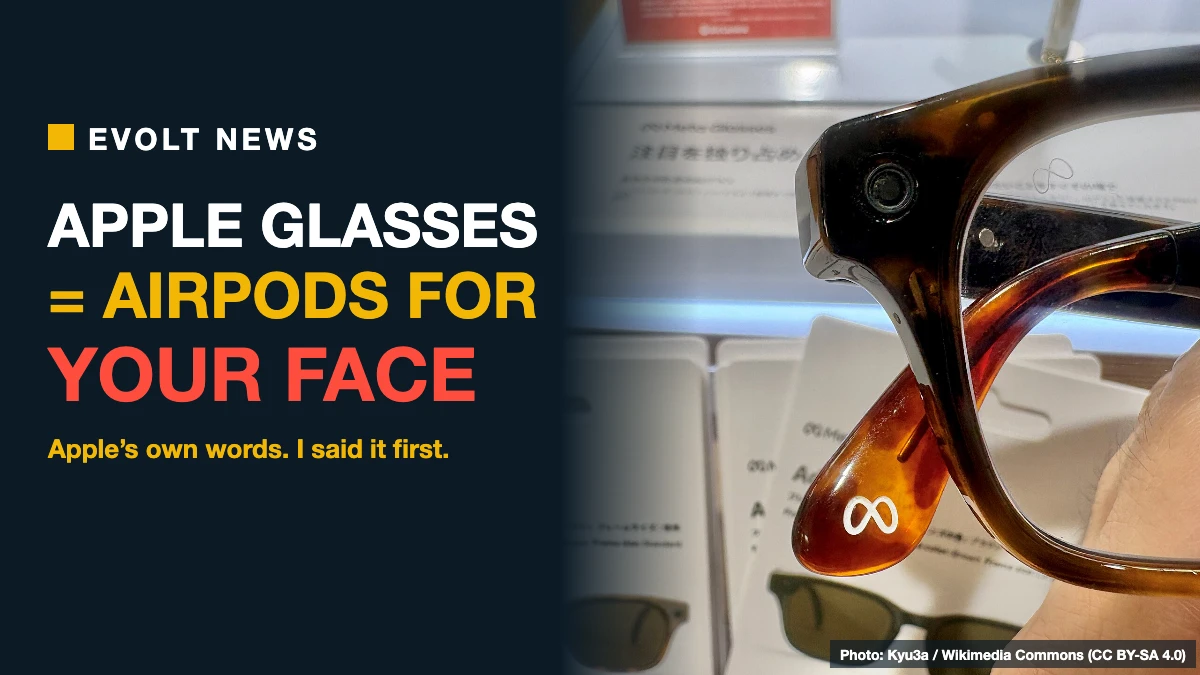
Featured image: the camera on Meta’s Ray-Ban smart glasses. Photo: Kyu3a / Wikimedia Commons (CC BY-SA 4.0).
This article is opinion.
Apple smart glasses: FAQ
When will Apple’s smart glasses come out?
Bloomberg reports Apple plans to introduce them at WWDC in June 2027 and sell them by the end of 2027.
Will Apple’s glasses have a display?
No. The first generation reportedly has no display and shows no visual information.
Can Apple’s glasses run apps?
No. Apps don’t run on the glasses. Siri AI uses app features through a nearby iPhone.
Do Apple’s glasses have cameras?
Yes, according to reports. The cameras feed Siri with information about your surroundings, and Apple says they won’t be used to take photos. A light on the front shows when the glasses are in use.
How much will Apple’s glasses cost?
Apple hasn’t announced a price. In May 2026 Bloomberg reported the glasses are aimed at the $200 to $500 eyewear market.
How do Apple’s glasses compare to Meta’s Ray-Ban glasses?
Apple’s prototypes are reportedly slightly thinner than Meta’s second-generation Ray-Ban glasses. Meta sold about 7 million glasses in 2025 and already offers a model with a display.
Sources: Bloomberg, AppleInsider, 9to5Mac, BGR, EssilorLuxottica.
Our Take
Apple’s first glasses arrive in late 2027 with no display and no apps, and the company’s own people call them AirPods for your face. Everything depends on Siri, and Siri depends on Google’s Gemini.
The real cost isn’t the price. It’s cameras and sensors feeding an assistant around the clock, in a world full of people who never said yes.