Key takeaways
- Smartphone shipments in Latin America fell 24% year over year in Q3 2026, the second-lowest quarter since 2015, according to Counterpoint Research, which blames the memory chip shortage, inflation and tighter household budgets.
- Apple fell the least of the top five brands, down 10%, and its share rose from 7% to 9%, moving it from fifth to fourth place. Counterpoint expects memory supply problems to last through the end of 2027.
- My view: Apple didn’t win anything. Everyone lost, Apple lost less. And when memory makes every phone more expensive, the buyer is the one who pays, in Brazil and everywhere else.
Smartphone shipments in Latin America dropped 24% year over year in Q3 2026, the second-lowest quarter since 2015, as the memory shortage, inflation and tighter budgets hit Brazil, Mexico and Colombia, Counterpoint Research says. Apple’s shipments fell 10%, the smallest drop among the top five brands, lifting its share from 7% to 9% and its rank to fourth.
In this article: “Gains ground” by falling 10% · The memory crunch, and who pays for it · Brazil, Mexico, Colombia: the real story · What it means for you · FAQ
“Gains ground” by falling 10%
Let me read the headline the way an ordinary buyer would. Apple “gains ground”. Apple “most resilient”. And then the number: Apple sold 10% fewer phones than a year ago. That is not growth. That is losing less than the others, while the whole market fell by almost a quarter.
Samsung is still far ahead with 35%. Motorola has 18%, Xiaomi 14%. Apple is fourth with 9%. In a region where people count every real and every peso, an iPhone is still a luxury. A drop of 10% instead of 34% says that rich buyers keep buying. It does not say that Apple suddenly became the people’s phone.
The memory crunch, and who pays for it
The reason for the crash has a name: memory. Chip makers sell their memory to AI data centers that pay more, and phone makers get what is left at a higher price. Counterpoint says Apple “absorbed the impact of price increases better than its rivals”. In my view, that is a polite way to say Apple had the margins and the stock, and the buyer still paid more.
I wrote the same about the MacBook Neo and its rising price. Memory is now the perfect excuse for every company. And Counterpoint says supply problems will likely continue through the end of 2027. So prices won’t come down soon. Remember that when the next price list arrives.
Brazil, Mexico, Colombia: the real story
Shipments fell 22% in Brazil, 26% in Mexico and 28% in Colombia. Counterpoint names inflation, political uncertainty and tight household budgets. That is the part the headline misses. People didn’t stop buying phones because they suddenly love their old ones. They stopped because they can’t afford the new ones.
And now add the new US tariffs on the countries that build iPhones. If they arrive in January, the price pressure only grows. For a buyer in São Paulo or Mexico City, the iPhone 18 Pro that launched in Chile, Brazil and Mexico in the first wave could get even more expensive, not cheaper.
What it means for you
If your phone works, keep it. This is the worst time in years to buy a new phone just because a new model came out. Prices are pushed up by memory, and possibly by tariffs.
If you must buy, look at last year’s models or a well-checked refurbished phone, and compare the total price with installments, not the monthly payment. A cheaper phone you can afford today beats an expensive one you pay for until 2028.
Also on Evolt News: New tariffs hit every country that builds your iPhone · MacBook Neo 2 and its next price
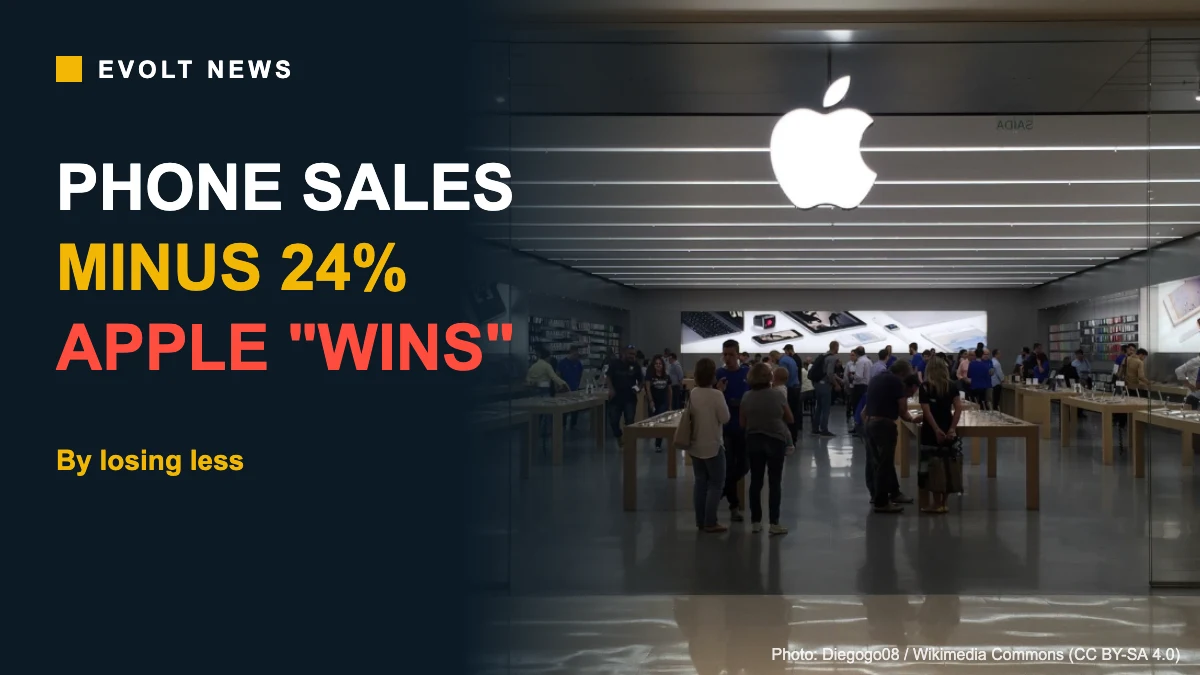
Featured image: Diegogo08 / Wikimedia Commons (CC BY-SA 4.0).
This article is opinion.
Latin America smartphone market Q3 2026: FAQ
How much did smartphone shipments fall in Latin America?
According to Counterpoint Research, shipments fell 24% year over year in Q3 2026, the second-lowest quarter since 2015.
Why did smartphone sales drop?
Counterpoint points to the global memory shortage, plus inflation, political uncertainty and tighter household budgets in Brazil, Mexico and Colombia.
How did Apple do in Latin America?
Apple’s shipments fell 10%, the smallest decline among the top five brands. Its share rose from 7% to 9%, and it moved from fifth to fourth place.
Who leads the Latin American smartphone market?
Samsung, with a 35% shipment share, followed by Motorola with 18%, Xiaomi with 14%, Apple with 9% and Honor with 8%.
How much did shipments fall in Brazil and Mexico?
Shipments fell 22% in Brazil, 26% in Mexico and 28% in Colombia.
When will smartphone prices stabilize?
Counterpoint expects the decline to ease in Q4 2026 and memory price pressure to moderate by Q2 2027, but supply constraints are likely to continue through the end of 2027.
Sources: Counterpoint Research, 9to5Mac.
Our Take
Latin American smartphone shipments fell 24% in Q3 2026, and Apple gained share by falling only 10%.
To me, nobody won here: the memory crunch makes every phone more expensive, and the buyer pays the difference.