Key takeaways
- Apple is reportedly building prototypes of a screenless fitness tracker: a thin fabric band with a small sensor module, similar to Whoop and Google’s Fitbit Air.
- The project is at an early stage, Apple has not decided whether to release it, and it would not arrive before 2028.
- The big question for buyers is not the hardware but the price, and whether Apple adds yet another monthly subscription.
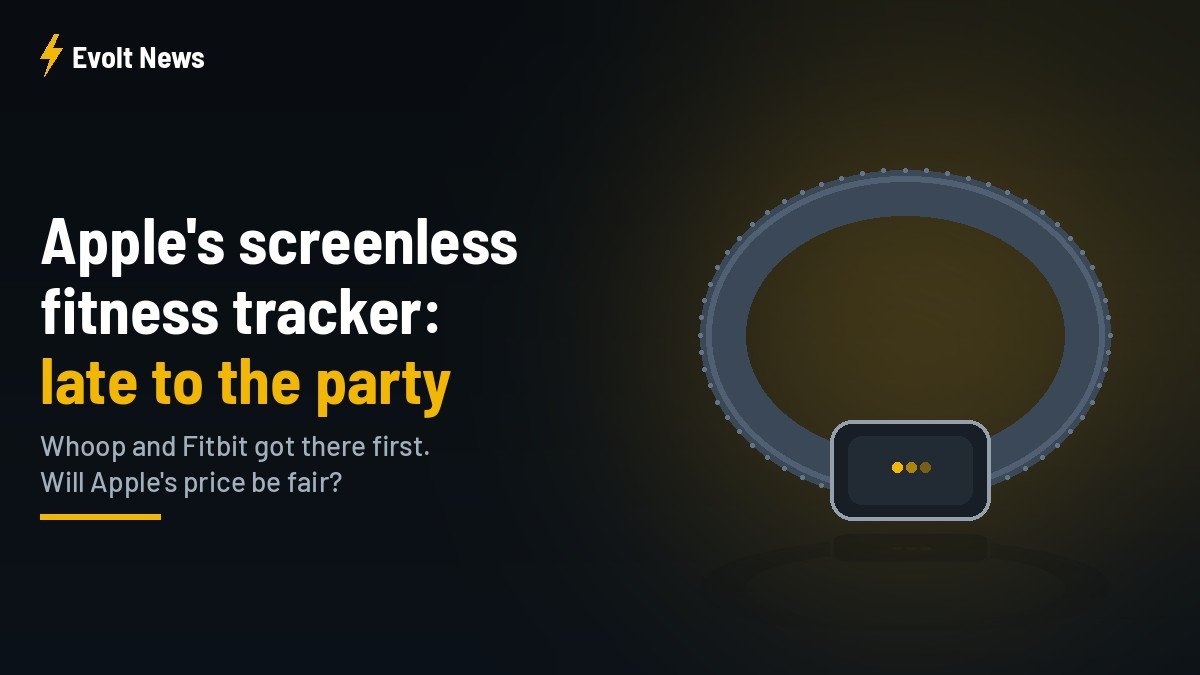
An Apple screenless fitness tracker is in the works, according to a Bloomberg report from September 22. Apple is said to be testing prototypes of a thin fabric band with a sensor-equipped module and no display at all, a product that would compete directly with Whoop and Google’s new Fitbit Air.
We like the idea. A band that quietly tracks your health, with no notifications pulling you back to your phone, sounds like exactly what many people need. But we also cannot help noticing a familiar pattern: Apple is arriving late to a category that others created, and we already suspect what the price tag will look like.
In this article: What we know · Apple’s familiar pattern · The subscription problem · If you have never worn a tracker · FAQ
What we know about Apple’s screenless tracker
According to Bloomberg, the project is in what Apple internally calls a “technology investigation” phase. That means prototypes exist, but no final product has been approved. An Apple spokesperson declined to comment.
- Design: a thin fabric band with a small computing module full of sensors, and no screen.
- Timing: not before 2028, and only if Apple decides to launch it.
- Support at the top: Tim Cook and services chief Eddy Cue, who took over Apple’s health efforts, are reportedly backing the idea.
- Unknown: sensors, battery life, price and whether a subscription will be required.
From our side, the most honest summary is simple: this is a promising rumour, not a product. We would not plan any purchase around it yet.
Apple’s familiar pattern: not first, but polished
Screenless health bands are not new. Whoop has built its whole business on them for years, its latest model offers up to 14 days of battery life, and Google has just launched the Fitbit Air at around $99. Garmin is also rumoured to be preparing something similar.
This is how Apple usually works. It rarely invents a category. Instead, it watches others take the risks, then takes the idea and refines it until it feels close to perfect. We have to admit that when we look at the result, Apple’s version is often the best one on the market. Still, it fascinates us every time how much of Apple’s success is built on ideas that started somewhere else. To be fair, the whole tech industry works this way, but Apple does it most visibly.
The Apple Watch already shows this direction. With Series 12 it gained a Readiness score and more frequent heart-rate readings, features that Whoop users will recognise immediately.
The real problem: another subscription
Whoop does not sell its band the classic way. You pay for a membership, roughly $17 to $30 a month depending on the plan, and the hardware comes with it. Some analysts expect Apple to follow a similar model, possibly tied to its services business.
In principle, we do not think that is wrong. Anyone who genuinely cares about their health can see the value in paying for good data and insights. The problem is everything around it. Almost everything is moving to subscriptions now: video, music, cloud storage, apps, and soon even the band on your wrist. Each one looks small on its own, but together they can easily reach a hundred dollars a month.
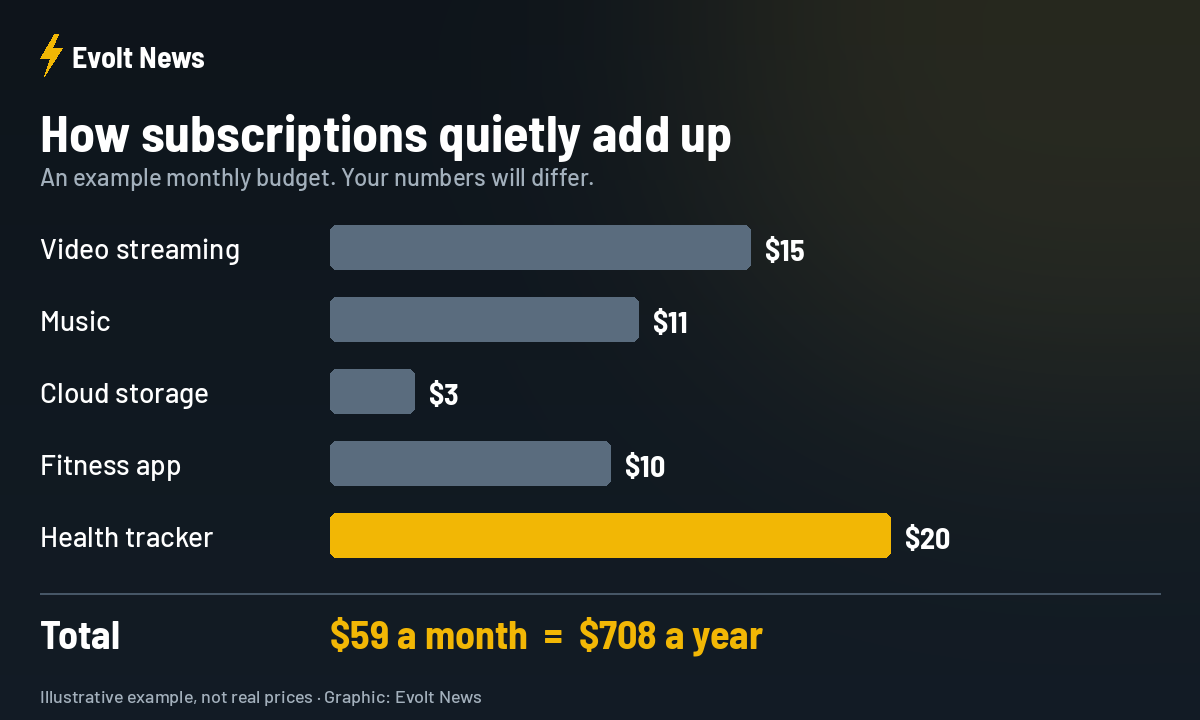
Our honest opinion: a fair price for a health subscription like this would be a few dollars a month. We are sceptical that Apple will see it that way. Experience tells us it will price the band like the king of the market, and that is the part that bothers us most about this whole story.
If you have never worn a fitness tracker
Many readers are in the same position we are: interested in trying a tracker, but lost in the number of bands on the market. Here is a simple way to think about it.
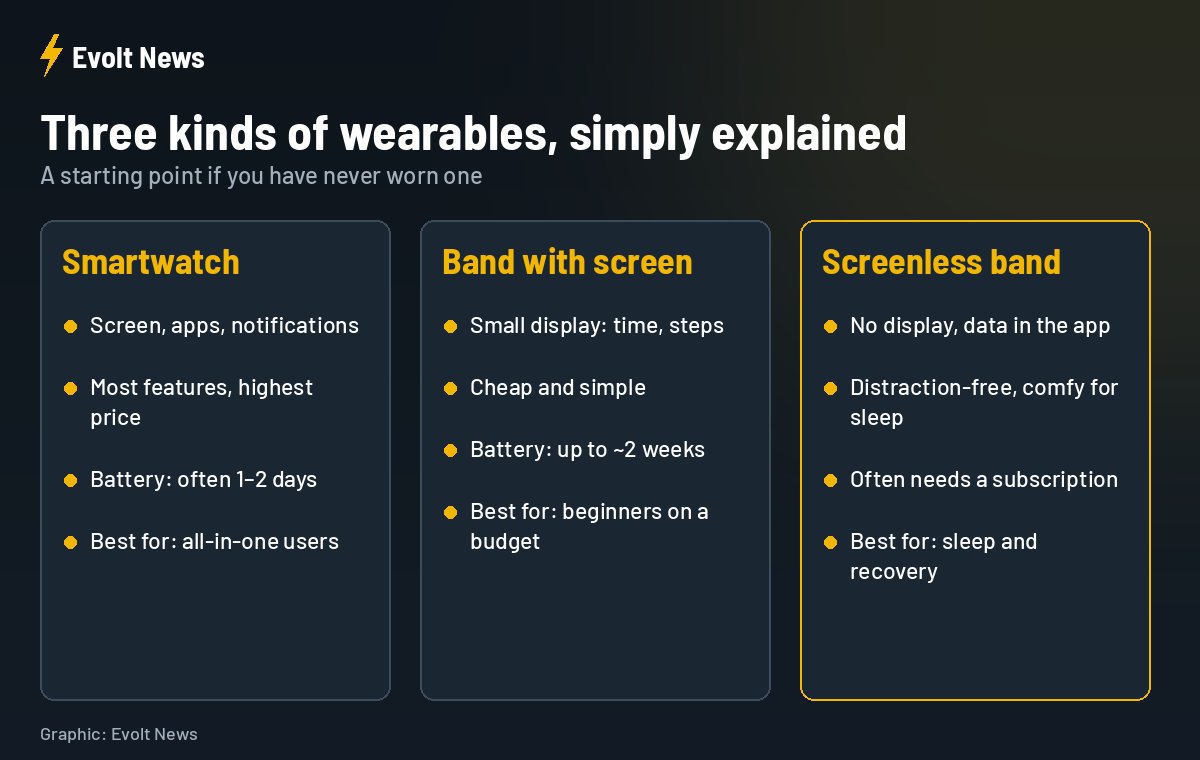
| Type | Good for | Watch out for |
|---|---|---|
| Smartwatch | Everything in one device | Price, short battery life, distractions |
| Band with a small screen | A cheap first step | Fewer advanced health features |
| Screenless band | Sleep, recovery, no distractions | Often a monthly subscription |
Our tip: start cheap. A simple band for a few weeks will tell you whether you actually look at the data. If you do, you can move up later, and by then you will also know whether Apple’s band is worth waiting for.
Apple Screenless Fitness Tracker FAQ
When will Apple release a screenless fitness tracker?
Not before 2028, according to Bloomberg, and Apple has not yet decided whether to release it at all.
Will it need a subscription?
Unknown. Whoop uses a membership model, and some analysts expect Apple to do something similar, but nothing is confirmed.
Will it replace the Apple Watch?
Unlikely. It is expected to be a simpler, distraction-free companion rather than a replacement.
What can I buy today instead?
Whoop and Google’s Fitbit Air are the best-known screenless bands today. Cheaper bands with small screens are a good first step for beginners.
Sources: Bloomberg (via 9to5Mac), 9to5Mac, Notebookcheck, The Apple Post, Gadget Review, BigGo Finance.