Key takeaways
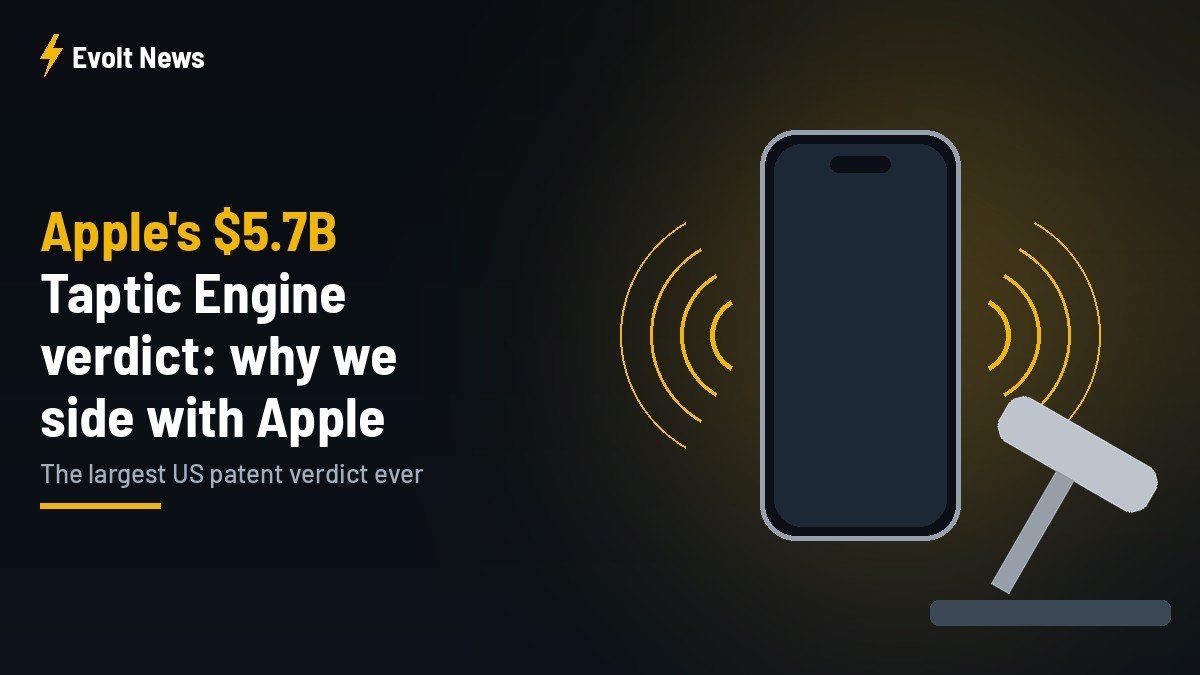
- A San Diego jury ordered Apple to pay Taction Technology $5.72 billion, finding that the Taptic Engine in iPhones and Apple Watches infringes two haptics patents. It is reported to be the largest US patent verdict ever.
- The jury found the infringement was not wilful. Apple strongly disagrees and will appeal, so no money has been paid.
- Litigation funder Burford Capital could receive about $1.4 billion if the verdict stands, and its shares jumped more than 9%.
The Apple Taptic Engine patent verdict is the kind of headline that makes people stop scrolling: $5.72 billion, the largest patent damages award reported in US history. A federal jury in San Diego decided on September 25 that the small vibration motor inside iPhones and Apple Watches infringes two patents owned by Taction Technology, a California haptics company.
We have followed the case closely, and our view is clear: we side with Apple. Here is what happened, who stands to profit, and why we believe this story is about more than one patent.
In this article: What happened · What the Taptic Engine does · Why we side with Apple · Follow the money · What happens next · FAQ
What happened in court
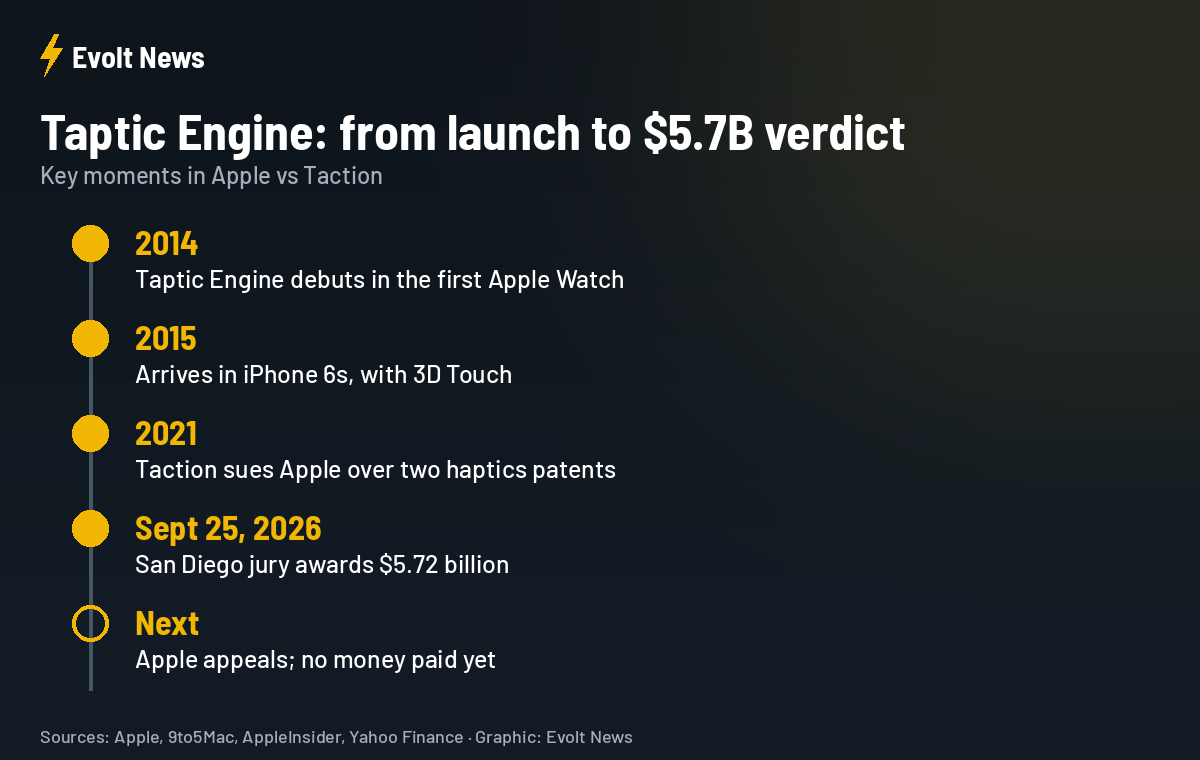
Taction sued Apple in 2021, claiming the Taptic Engine uses its patented technology for vibration modules that apply feedback to the skin. After more than five years, a seven-person jury in San Diego sided with Taction and awarded $5,721,961,750. The jury found that Apple infringed the patents, but not wilfully.
Apple rejected the decision. It said it strongly disagrees with the verdict and the damages, that its Taptic Engine is fundamentally different from Taction’s technology, and that Taction’s own testing during the trial confirmed this. Apple says it will appeal.
What the Taptic Engine actually does
The Taptic Engine is the component that creates the precise taps and vibrations you feel on an iPhone or Apple Watch: notification taps on your wrist, the keyboard feedback, the simulated click of a button. It debuted in the first Apple Watch in 2014 and arrived in the iPhone with the iPhone 6s in 2015, replacing the old, buzzy vibration motor.
We still remember how cool it felt the first time: pressing and holding an app icon on the iPhone and feeling that soft, precise little click in response. It was one of those small details that made the iPhone feel different from everything else.
Why we side with Apple
Apple is not a naive newcomer. We simply do not believe that a company of its size and experience would take someone else’s technology, change nothing and put it straight into the Apple Watch. Apple has its own teams that developed the Taptic Engine, and it is tuned in Apple’s own way. A company that has been in this market for decades also knows exactly what legal trouble it could face if it copied something outright.
Yes, we have often said that Apple takes existing ideas. Everyone in tech does. But Apple does not just take them. It reworks them and perfects them, and that is exactly why, in the end, the idea becomes Apple’s. In our opinion, the Taptic Engine is a clear example: a different, refined product, not a copy.
We also see a bigger pattern. The more successful Apple becomes, the more companies seem to want a slice of its money. If every company that developed something similar a little earlier could sue, where would it end? Should we expect Samsung to sue over foldable phones next, because it made one first? That is how absurd this logic can get.
Follow the money: who really profits
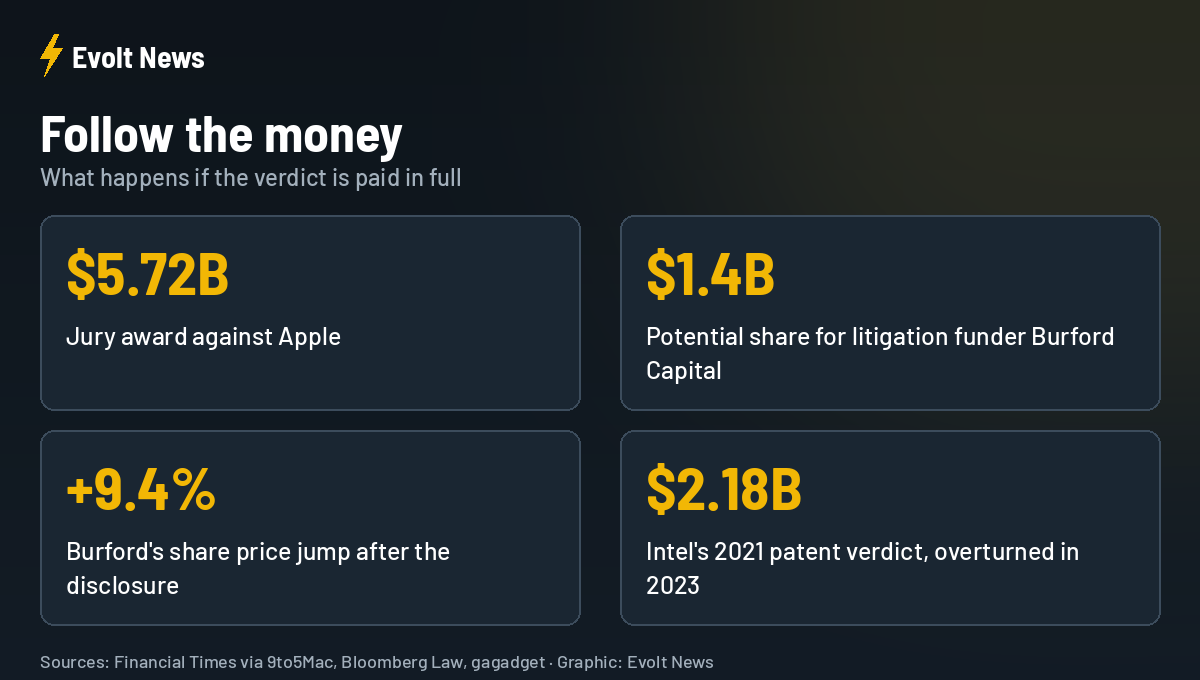
Shortly after the verdict, litigation funder Burford Capital disclosed that it has a financial stake in the case. According to the Financial Times, Burford could be entitled to about $1.4 billion if the full $5.72 billion is paid. Its shares closed up 9.41% in London. Court records cited by Bloomberg Law show Taction received funding from a firm identified as an indirect Burford subsidiary.
Litigation funding is legal and common. Supporters say it helps small companies take on giants they could never afford to fight alone. But honestly, we are not comfortable with it. To us, it looks like a business model where investors pick which company to sue and what to sue over, purely to make money from the result. When a funder with a $1.4 billion upside is behind a case, it makes us look at the whole dispute more sceptically.
What happens next
| Question | Answer |
|---|---|
| Has Apple paid? | No. Post-trial motions and an appeal come first. |
| Could the verdict be overturned? | Yes. Intel’s $2.18B verdict from 2021 was overturned in 2023. |
| Will iPhones or Watches change? | No. Nothing changes for buyers right now. |
We are confident Apple will win on appeal, just as Intel did. But we also know anything can happen in court, and in the end a judge will decide. What we are fairly sure about is this: the deeper this goes, the more companies will see suing Apple as a way to make money.
Apple Taptic Engine Patent Verdict FAQ
How much does Apple have to pay Taction?
The jury awarded $5.72 billion, but Apple is appealing and nothing has been paid.
What is the Taptic Engine?
The component in iPhones and Apple Watches that creates precise taps and vibrations for notifications, typing and button clicks.
Will this affect my iPhone or Apple Watch?
No. Devices remain on sale and the Taptic Engine is not being removed.
Who is Burford Capital?
A litigation funder that finances lawsuits in exchange for a share of any payout. It could receive about $1.4 billion if the verdict is paid in full.
Sources: 9to5Mac, Financial Times, Bloomberg Law, AppleInsider, Yahoo Finance / Gadget Review, The Apple Post, MacDailyNews, gagadget.