Key takeaways
- iOS 27 lets two iPhones share one phone number with iPhone Handoff. The number is active on only one iPhone at a time, and it switches to whichever iPhone you unlock.
- You need an eSIM from a supporting carrier: T-Mobile in the US, Telekom in Germany and EE in the UK. T-Mobile charges $5 a month, Telekom €6.95 a month.
- My view: the feature is clever, but paying a monthly fee for a switch that runs in software is money for nothing. And Apple’s real message is simple: buy two iPhones.
With iPhone Handoff in iOS 27, one phone number can live on two iPhones, a main one and a secondary one, and calls, voicemail, messages and Find My move to whichever iPhone you unlock. It needs an eSIM from T-Mobile (US), Telekom (Germany) or EE (UK), with Verizon expected later, and T-Mobile charges $5 a month while Telekom charges €6.95.
In this article: How iPhone Handoff works · $5 a month for a switch · Apple’s real message: why choose? · The fine print nobody mentions · Who should use it, and who shouldn’t · What this means for you · My prediction · FAQ
Related: Check what else you pay for every month. How to cancel subscriptions on iPhone and Mac.
How iPhone Handoff works
This is not the old Handoff that moves a Safari tab from your iPhone to your Mac. iPhone Handoff is a new eSIM feature: you set one iPhone as the main iPhone and the other as the secondary one, and the same number lives on both.
Only one is “live” at a time. You simply unlock the iPhone you want to use, and the number moves there. The screen shows “Switched to this iPhone”, and the other iPhone gets a small arrow at the top. Calls, voicemail, iMessage, RCS, SMS and your Find My location all follow you.
The requirements are strict: both iPhones on iOS 27, signed in to the same Apple Account, on Wi-Fi, with Messages in iCloud and FaceTime and iMessage turned on. Carrier services like Call Forwarding and Caller ID can only be managed from the main iPhone.
$5 a month for a switch
Here is the part that annoys me. The switch happens in software. Apple built it, your iPhone does the work, and the carrier still sends a bill: T-Mobile wants $5 a month, Telekom in Germany €6.95 a month on plans that don’t already include a multi-SIM.
Think of a parking garage that charges you every month because you own two cars, even though you can only park one at a time. That is exactly how this pricing feels to me. Over two years, the T-Mobile fee alone is $120 for something that costs the carrier almost nothing.
And watch out for one line in Apple’s own support page: deleting the eSIM from the iPhone does not stop the service. You have to call the carrier and cancel, otherwise they can keep charging you. Many people will learn that from their bill.

Apple’s real message: why choose?
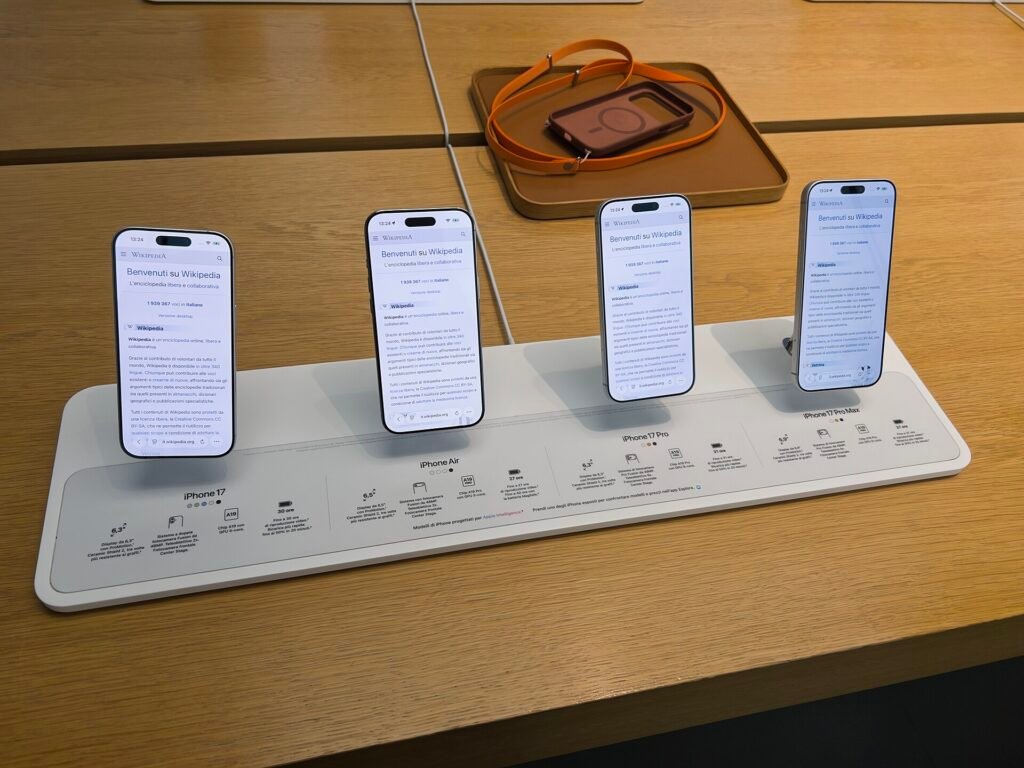
Apple sells this as a convenience for “people with two iPhones”. But let’s be honest about who that is. The iPhone Duo and the iPhone 18 Pro sit next to each other in the store, and now Apple gives you a reason not to choose. Keep both, switch by unlocking.
I see it the way I see a lot of Apple features: a nice idea that also works as a sales argument. One phone was expensive enough. Now the system quietly nudges you toward two, plus a monthly fee to your carrier on top.
Fair point, though: there are real uses. A fragile folding iPhone Duo for the office and a tough older iPhone for the gym, the beach or a ski trip, with the same number and the same chats. For that, it’s genuinely good.
The fine print nobody mentions
| What happens | |
|---|---|
| Calls, voicemail, messages | Move to the iPhone you unlock |
| Apple Watch | Does not switch, stays paired to one iPhone |
| Wallet | Cards work on both, some transit passes and IDs only on one |
| Banking apps | May ask for approval on the other iPhone |
| Carrier settings | Only from the main iPhone |
| Cancelling | Call the carrier, deleting the eSIM is not enough |
The Apple Watch part is the biggest gap. If your Watch is paired to the iPhone in the drawer, it won’t follow the number to the other one. For a company that sells the “ecosystem”, that is half a solution.
Who should use it, and who shouldn’t
- Use it if you really carry two iPhones for different situations and you’re already on T-Mobile, Telekom or EE.
- Skip it if you’re on a carrier that doesn’t support it yet, like AT&T, or if your second iPhone sits in a drawer most of the month.
- Check your plan first. Some Telekom plans already include a multi-SIM, so the fee may not apply.
- Pair your Apple Watch with the iPhone you use most.
- To stop it, call your carrier. Don’t just delete the eSIM.
What this means for you
For most people, nothing changes: one iPhone, one number, no fee. If you’re thinking about buying a second iPhone, like a thin iPhone Air 2 next to your main phone, this feature makes that easier, but add the monthly carrier fee to the real price. And if you’re waiting for iOS 27.3, nothing about this changes there.
My prediction
Verizon will add iPhone Handoff and charge for it too, probably the same $5 or more. AT&T will hold out a bit longer, then follow. No big carrier will give it away for free, because a monthly fee for “a second device on the same number” is too easy to sell.
And at the next iPhone launch, Apple will put iPhone Handoff on a slide right next to the iPhone Duo 2. Not as a niche feature, but as the reason to buy two. Remember my words.
Also on Evolt News: iPhone Air 2 gets two cameras · iOS 27.3: every new feature · iPhone 20: four prototypes
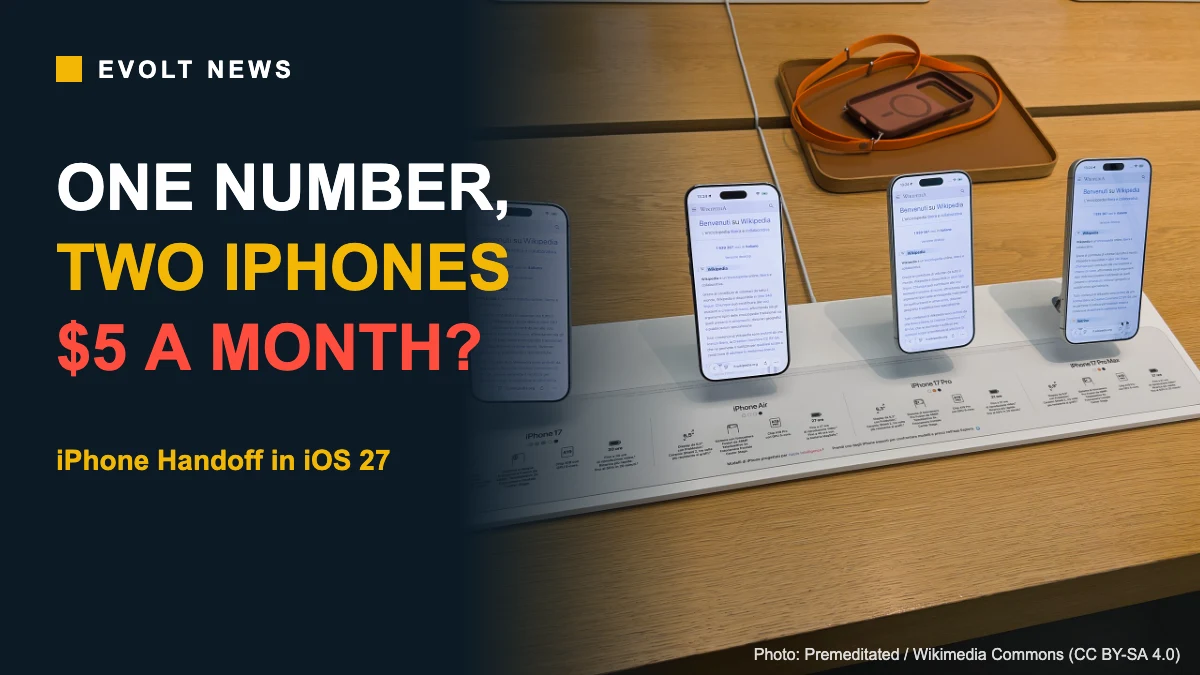
Featured image: Premeditated / Wikimedia Commons (CC BY-SA 4.0).
This article is opinion.
iPhone Handoff: FAQ
What is iPhone Handoff?
iPhone Handoff is an iOS 27 eSIM feature that lets two iPhones share one phone number. The number is active on one iPhone at a time and moves to the iPhone you unlock.
Which carriers support iPhone Handoff?
Apple lists T-Mobile in the US, Telekom in Germany and EE in the UK. Verizon is expected later, and AT&T has not committed.
How much does iPhone Handoff cost?
T-Mobile charges $5 a month. Telekom charges €6.95 a month on plans without a multi-SIM, while some MagentaMobil plans include one. EE has not published separate pricing in Apple’s documentation.
What do I need to use it?
Two iPhones on iOS 27 or later, signed in to the same Apple Account, on Wi-Fi, with Messages in iCloud and FaceTime and iMessage on, plus an eSIM from a supporting carrier.
Does my Apple Watch switch too?
No. The Apple Watch stays paired to one iPhone. Apple recommends pairing it with the iPhone you use most.
How do I turn iPhone Handoff off?
You have to contact your carrier. Apple says deleting the eSIM from the iPhone does not end the service, and the carrier may keep charging until you cancel.
Sources: Apple Support, MacRumors, 9to5Mac.
Our Take
iPhone Handoff lets one number move between two iPhones when you unlock them, but only on a few carriers, and T-Mobile and Telekom charge a monthly fee for it.
The way I see it, the feature is useful for a small group of people and a quiet sales pitch for everyone else: buy two iPhones, then pay your carrier every month for a switch Apple already built.