Key takeaways
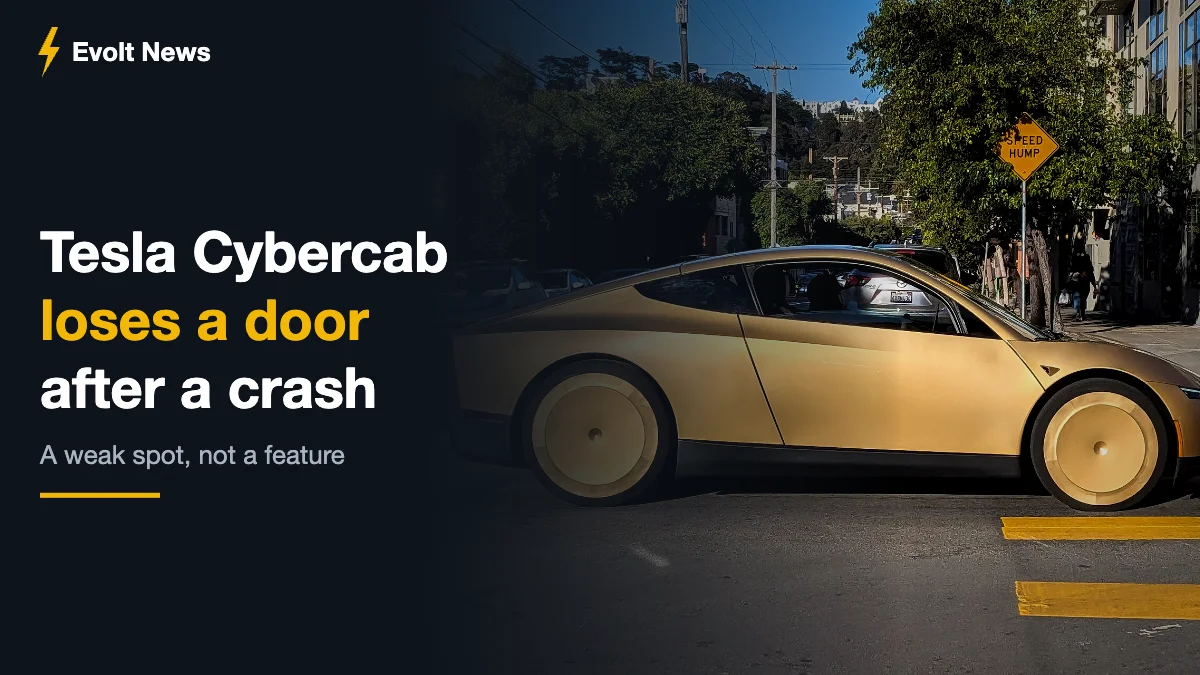
- A Tesla Cybercab lost the full outer panel of its driver-side door in a low-speed crash in Philadelphia.
- Tesla is not on PennDOT’s list of companies cleared to run automated vehicles in Pennsylvania.
- Our view: a body panel falling off is a weak spot, and Tesla’s silence is the real problem.
A Tesla Cybercab crash in Philadelphia left the gold robotaxi without the outer skin of its driver-side door. As reported by Electrek, photos posted on Reddit show the car stopped on South Broad Street with the door’s inner frame, window mechanism and wiring fully exposed.
We still do not know who caused the crash. But honestly, for God’s sake, how can anyone call this design? In my opinion, it is a weak spot and nothing more.
In this article: What happened in Philadelphia · Smart design or a weak spot? · No permit in Pennsylvania · Hidden data and Tesla’s silence · Even if the other driver was at fault · FAQ
What happened in Philadelphia
Tesla Cybercab crash: what we know
- Damage: driver-side door skin torn off, frame exposed
- Fault: unknown, a second car stopped behind it
- Permit: Tesla is not on PennDOT’s automated-vehicle list
- Driving mode: likely a human driver or Level 2 assist
- Federal data: Level 2 crashes reported only if serious
The Reddit user who took the photos did not see the crash, but said it looked like a low-speed incident. The glass is intact and the structure underneath does not look bent. There is a crumpled trim piece under the door and scuffs on the rear quarter panel. A dark sedan was stopped right behind the Cybercab. There is no word on injuries.
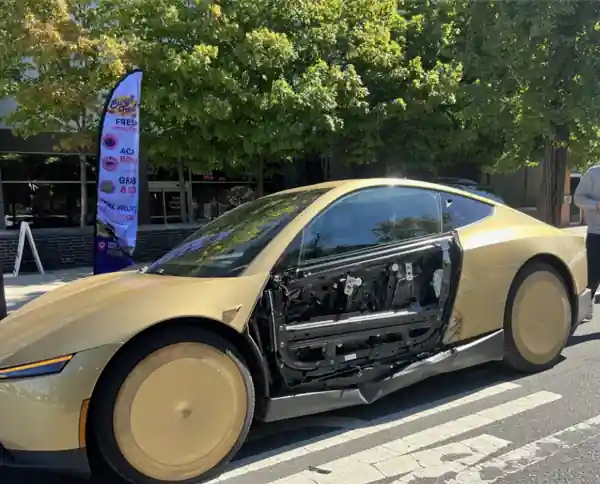
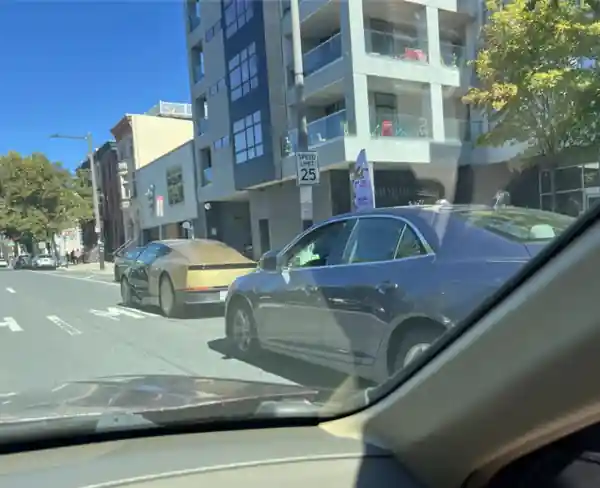
Photos: u/ryephila via Reddit
Gold Cybercabs have been showing up around Philadelphia since mid-September. Around 30 are parked at a Tesla store in Devon, and Tesla has not said what they are for.
Smart design or a weak spot?
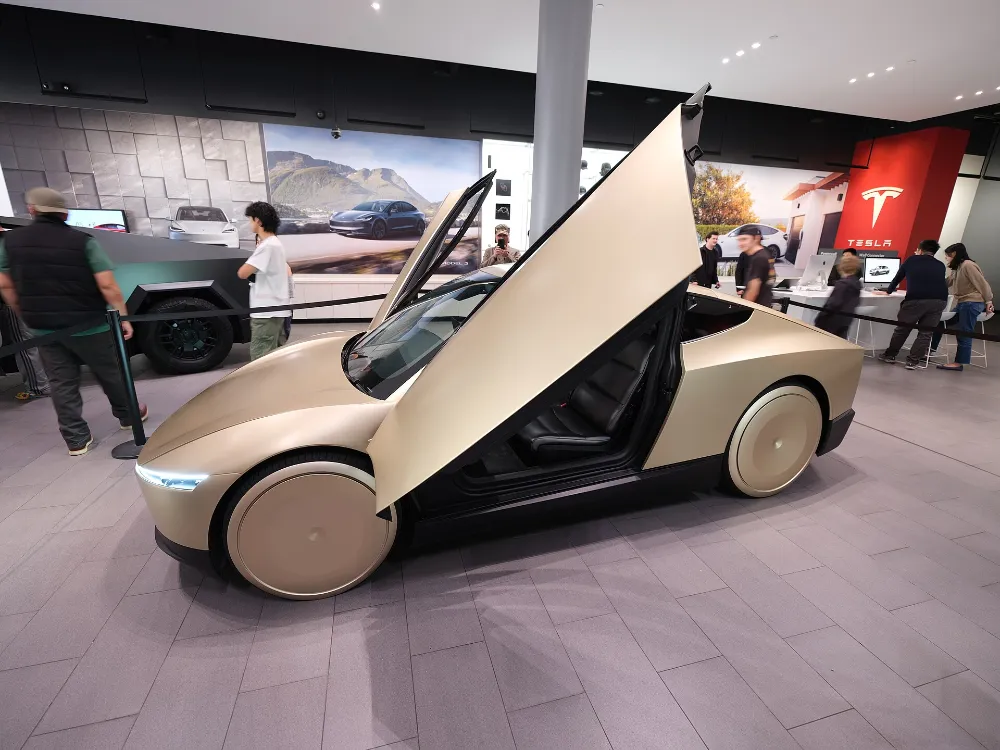
Tesla does not paint the Cybercab. The body panels are plastic with the color mixed into the material, joined to a plastic backing and held on by fasteners from the inside. Tesla fans already say the panel can be swapped in five minutes, so this is fine.
And what is going on with Tesla fans? “You can swap it in five minutes, it’s normal.” People, this is not normal. Tell me when you last saw a part just fall off a car from one of the big carmakers, and everyone said it was fine. In my opinion, this is a weak spot, full stop. A quick repair may be nice for a robotaxi fleet, but a panel lying on a city street is a danger for everyone else on that street.
And as always, I don’t think Tesla will say a word about it. When the stock price goes up, they know how to put on a perfect show. But when there is a problem, they step back and stay silent.
No permit in Pennsylvania
Pennsylvania requires a certificate from PennDOT to operate a highly automated vehicle, meaning SAE Level 3 and up. Seven companies are on that list, including Waymo. Tesla is not.
Without that certificate, the Cybercab was most likely driven by a human or running Tesla’s software as a Level 2 driver assist, with a person legally responsible behind the wheel. Tesla has been fitting Cybertruck steering wheels into test Cybercabs for exactly this.
That may be legal on paper. But I have said it before: why does nobody deal with Tesla? In my opinion, it is a real problem when one company gets to do what others need a permit for. Is it a mistake, or is it because it’s Elon Musk, and his cars can do anything? To me, that is simply not fair. And let’s look at it from the right angle: this certificate is not just paperwork. It shows that a car is safe. This is about safety.
Hidden data and Tesla’s silence
This is the part that worries me most. Under NHTSA’s Standing General Order, a crash involving an automated driving system must be reported even with only property damage. A crash on a Level 2 system is reported only if someone dies or goes to hospital, an airbag deploys, or a pedestrian or cyclist is hit. So this crash may never appear in federal data at all.
And when Tesla crashes do appear, the descriptions are redacted. Earlier this year Tesla reported a record 207 Autopilot and FSD crashes in a single month. That Tesla blacks out its data has been known for a long time, and I really don’t like it. We don’t see the data, we don’t know the whole truth. So how can we trust robotaxis, especially Tesla’s?
I wrote before about Tesla Robotaxi at night. Let’s not forget that Tesla had problems seeing properly at night, problems that put animals and people at risk. I like it less and less how companies, and especially Tesla, handle problems like this. They stay silent and say nothing about what is going on. I have the feeling that for them, a problem means losing money, and in that moment nobody thinks about safety. Honestly, it gets on my nerves that we have reached the point where companies basically tell us in public: we don’t care, we just want the most money and to be number one.
Even if the other driver was at fault
Even if we find out that in this case the other driver was at fault, that is at least one piece of good news. But in my opinion, it still does not cover how many crashes Tesla has had lately. One case where someone else is to blame does not change a record 207 crashes in a single month.
And what bothers me even more are the Tesla fans who take Tesla’s side after every single crash. Sometimes I honestly feel like some of these Tesla fans on the internet are bots, or Musk’s own people, trying to protect him at any cost. And in my opinion, Elon never comes out in public and says: be careful, something went wrong. He never says that.
Would I sit in a Tesla Cybercab without a driver? Definitely not. I rode in a robotaxi once this year, and it will probably be the last time unless these robotaxis get safer. With all the news like this lately, I would really tell people to be careful. For more on where Tesla is heading, see the Tesla Roadster demo.
Featured photo: 9yz, CC BY 4.0, via Wikimedia Commons
Tesla Cybercab crash: FAQ
What happened to the Tesla Cybercab in Philadelphia?
In a low-speed crash on South Broad Street, the Cybercab lost the entire outer panel of its driver-side door.
Who caused the crash?
It is not known yet. A second car was stopped behind the Cybercab, and there is no word on injuries.
Can Tesla run robotaxis in Pennsylvania?
Tesla is not on PennDOT’s list of companies cleared to operate highly automated vehicles. Waymo is.
Why did the door panel come off?
The Cybercab uses unpainted, color-molded plastic panels held on by fasteners, designed to be swapped quickly.
Will the crash be reported to NHTSA?
Only if it was an automated driving crash or a serious Level 2 crash. A minor Level 2 crash does not have to be reported.
Sources: Electrek, Reddit (u/ryephila), Philadelphia Inquirer.
Our Take
A door panel that falls off after a small hit is not a feature. It is a weak spot.
The bigger problem is everything around it: no automated-vehicle permit, crash data that can stay hidden, and a company that talks loudly about stock prices but goes silent when something goes wrong.
My final word: people have to be very careful about what is happening around Tesla, and not support things that put other drivers, people and animals at risk.