Key takeaways
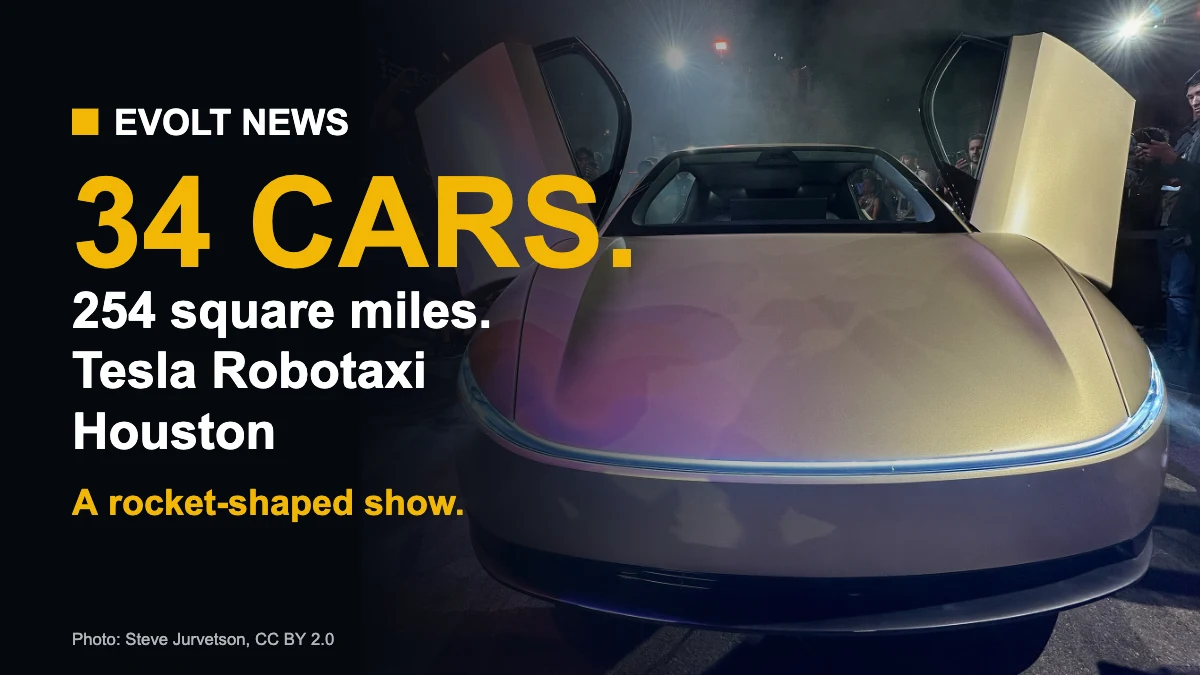
- Tesla expanded its Robotaxi area in Houston on October 26 and shaped it like a rocket: “Houston, we have liftoff.” The area grew about ten times, to roughly 254 square miles, but Robotaxi Tracker counts only 34 unsupervised cars there and no Cybercabs.
- Musk has promised 1,000 robotaxis by the end of 2026. On the Q3 earnings call, Tesla said safety is its main bottleneck. A federal probe into FSD crashes in low visibility is in its most serious stage, with no verdict yet. Waymo has run driverless rides in Houston since February.
- My view: the map is a show that closes our eyes to the most important thing, safety. If everything is fixed, why not say it?
Tesla expanded its Robotaxi service area in Houston on October 26 and drew the new boundary in the shape of a rocket. It announced the change on X with the line “Houston, we have liftoff.” According to Robotaxi Tracker, cited by Electrek, the area grew from about 25 to about 254 square miles, roughly ten times larger. The tracker counts 34 unsupervised Model Y robotaxis in Houston, up from 22 three months ago, which works out to about one car per 7.5 square miles. There are no Cybercabs in the fleet.
Tesla launched Robotaxi in Houston and Dallas in April with small service areas, after starting in Austin in June 2025. Elon Musk has promised 1,000 robotaxis by the end of 2026; in June, Bloomberg counted 59 unsupervised vehicles across all three cities. On its Q3 earnings call, Tesla said safety remains the main bottleneck for expansion, and it tied a bigger fleet ramp to FSD version 15. Waymo has offered fully driverless rides in Houston since February.
Separately, the US safety regulator NHTSA has been investigating FSD (Supervised) since October 2024 over crashes in low visibility, one of which killed a pedestrian. In March 2026 it moved the probe to an engineering analysis, its most serious stage, and said it had not received all the data it needed from Tesla. A second probe covers more than 80 reports of traffic violations, such as running red lights.
| Tesla Robotaxi, Houston | Waymo, Houston | |
|---|---|---|
| Driverless rides since | April 2026 | February 2026 |
| Service area | About 254 sq mi (rocket shape) | Nearly 50 sq mi |
| Cars | 34 Model Y, no Cybercabs | Not disclosed for Houston |
| Cars across the US | 59 unsupervised (June, Bloomberg) | About 3,000 in 11 cities |
In this article: Musk’s jokes are back · The map is a show. Safety is the story · No verdict, no data · 1,000 cars and a million reasons · Waymo: uglier, but safer · FSD 15 and the “big fleet” · Safety is the brake. They said it themselves · FAQ
Musk’s jokes are back
Ah, yes. We haven’t heard about Musk and his jokes for a long time, how he laughs at the whole world and does what he wants. But the funny part is something else. A man who promises so much and almost never keeps a promise, for the first time made something real: a bigger map. OK, that is probably fine.
But somebody tell Musk that a person who orders a taxi can’t wait until one of his few cars becomes free. I can already see it: someone wants his robotaxi, and the app says you have to wait 20 minutes for a car. Having so few cars on such a big map is a joke.
The map is a show. Safety is the story
What interests me the most is something else. After so many crashes, including a record 207 Autopilot and FSD crashes reported in a single month, the self-driving car is back, and now there will be even more Teslas on the roads that drive by their own rules. Some companies pulled their cars after problems. Tesla’s Robotaxi was caught speeding in a school zone, where it should go slower. And all the fans and shareholders see only one thing: Tesla is scaling.
When I read this news, I see something different. Did anyone check whether they are ready to scale, or does Musk just control everything again? I know some people won’t like that I say it out loud, but I am scared. Musk doesn’t care. He always plays by his own rules, and after some crash he will just give a comment again. And when the first fatal crash happens, everyone will talk about it as something bad. Everyone who reads my articles for a while knows I don’t have to like this man. But why be happy with Musk?
No verdict, no data
Everyone talks about the map and about not having enough cars. But I don’t think the authorities have said that Teslas passed any check. Everyone said it will be investigated, and nobody knows any verdict from that investigation. How is that possible? And Musk showed nothing about his tests. He keeps everything secret. The regulator itself said it didn’t even get all the data from Tesla. And with that, Tesla has the nerve to make its map ten times bigger? The regulator is still waiting for the data it asked for, and Tesla is drawing rockets. How can you expand a service when you can’t even give the authorities what they need to check it?
If they really did everything and the cars are safe now, why didn’t they announce it? So again, the show with the map closes our eyes to the most important thing: these cars decide for themselves. In my opinion, Musk only thinks about how to pull out as much as possible, because the stock keeps going down. This year Tesla was about 20% down by late summer, while most big tech stocks went up. And he does anything to get his pay package for himself.
1,000 cars and a million reasons
Musk promised 1,000 cars by the end of the year, and he will keep promising. Then maybe at the start of the year. And then we know, almost for sure, that it won’t happen, and a million reasons will be found why it couldn’t be done. But maybe that is for the better.
And the Cybercab. Musk showed it at the “We, Robot” event in October 2024 and promised production in 2026. Production at Gigafactory Texas started in April 2026, and in May there were reports that the first paying passengers in Houston would ride in it “within weeks”. Now it is the end of October, and in Houston there is not a single one. The Cybercab, which was supposed to carry people and make money for Tesla long ago, probably got lost somewhere on the way. Nobody talks about it. I think almost everyone has already forgotten Elon’s promise. But that doesn’t interest anyone. Everyone is interested only in what the egoist posts on X, nothing more. I have the feeling that because of Musk, people are ready for anything and ready to believe every myth he tells.
Waymo: uglier, but safer
Waymo is a proven robotaxi that already has practice, and it showed quite well that it is reliable. When something happens or breaks, they pull the cars from the market right away and fix them. They don’t let it go on. That is what I like.
And the numbers speak for themselves. Waymo has offered fully driverless rides to the public since October 2020, starting in Phoenix. Today it runs about 3,000 robotaxis in 11 US cities and completes more than 500,000 paid rides a week. By the end of March 2026, its cars had driven more than 220 million miles with nobody behind the wheel. Compared with human drivers in the same areas, Waymo reports 94% fewer crashes with serious or fatal injuries, 82% fewer crashes with any injury and 93% fewer crashes that injured pedestrians. Tesla has never published comparable data for its Robotaxi.
In my opinion, we should support companies like this, which think about our safety, not crazy Elon. Even if Waymo cars are uglier than a Tesla, it is a taxi that takes you safely where you need to go.
FSD 15 and the “big fleet”
Elon’s FSD and his big fleet are just talk to me. Proof? None. We didn’t know how many miles the robotaxis drove with people watching over the process, and we never knew the whole fleet that collects this data for them. For me, it is just more speculation without proof. And FSD 15? Again, we don’t know if it will be good, or the same bad one that, with time, goes its own way.
Safety is the brake. They said it themselves
This is what fascinates me the most about this news. On the earnings call, they admitted that the brake is safety. That means there is a snag. But I am afraid that safety is not that high on Musk’s list. He knows he has power and money, and that is more than enough for him. Then he looks at the stock chart, and that’s it. Not a word about how the safety fix is going.
And the investors, where are they looking? Why don’t they jump off the ship called Tesla? Honestly, I don’t see much potential anymore. Chinese carmakers, and in the end the big carmakers too, have cheaper and prettier cars. And the competition is safer, which is the most important thing.
Also on Evolt News: Tesla FSD on its own maps: a huge mistake · Tesla on FSD hits a police car
Photo: Steve Jurvetson, CC BY 2.0, via Wikimedia Commons.
This article is opinion.
Tesla Robotaxi Houston: FAQ
How big is Tesla Robotaxi’s Houston service area?
About 254 square miles after the October 26, 2026 expansion, according to Robotaxi Tracker. Tesla shaped the new area like a rocket.
How many Tesla robotaxis operate in Houston?
Robotaxi Tracker counts 34 unsupervised Model Y robotaxis in Houston and no Cybercabs.
Is Tesla Robotaxi in Houston driverless?
Tesla says the Houston Robotaxi rides are unsupervised, with no safety monitor in the front seats.
How does Tesla Robotaxi compare with Waymo in Houston?
Waymo has offered driverless rides in Houston since February 2026 and runs about 3,000 robotaxis across 11 US cities. Tesla launched in Houston in April 2026.
Is NHTSA investigating Tesla FSD?
Yes. NHTSA has investigated FSD (Supervised) since October 2024 over low-visibility crashes and moved the probe to an engineering analysis in March 2026. A second probe covers traffic violations such as running red lights.
Sources: Tesla, Waymo, Electrek, Robotaxi Tracker, Bloomberg, Reuters, NHTSA.
Our Take
Tesla made its Houston Robotaxi map ten times bigger and shaped it like a rocket, but only 34 cars serve it and the Cybercab is nowhere to be seen. Tesla itself says safety is the brake, and a federal probe into FSD crashes still has no verdict.
The map is a show. Until Tesla shows proof that its cars are safe, I would trust Waymo more.